The Zone of Interest is an Exquisite Failure

The aesthetics of silence play a crucial role in our understanding of evil in the brilliant, but flawed, The Zone of Interest.

Lexie’s Cine Obscura is also a Youtube Channel!
This essay is the text of a video essay of the same name, which can be viewed here: https://youtu.be/9BXXAaDgvNo?si=krlaeF47l6YmYNr3

Some films bother me for months. Not because of anything represented or said, but because I feel as if there is some key point about it I have not fully understood. I usually express that as not knowing what a film is “about” – much to the amusement of those around me. I think what I mean is that I’m not sure what mechanism the film in question has provoked ambivalence in me. The Zone of Interest is my latest entry. I walked out of the theatre feeling… unclean. I chalked it up to the way the film conveyed its message by way of flippancy – like Hedwig (Sandra Hüller) putting on lipstick stolen from the incoming prisoners of Auschwitz. The film embodies a refusal to see in every sense. Even the photographs of Hitler do not look out toward the room. A film that formulates itself around the aesthetics of visual silence is a tremendous experiment indeed, and no artist should be faulted if the experiment fails, as I think it does in The Zone of Interest. If the purpose of this film is to convey the aesthetics of evil, bound up by an aesthetics of silence writ in a refusal to see in the cinematic sense, and link that to the psychology of man, the film has failed because it itself refuses to see what makes up men. 
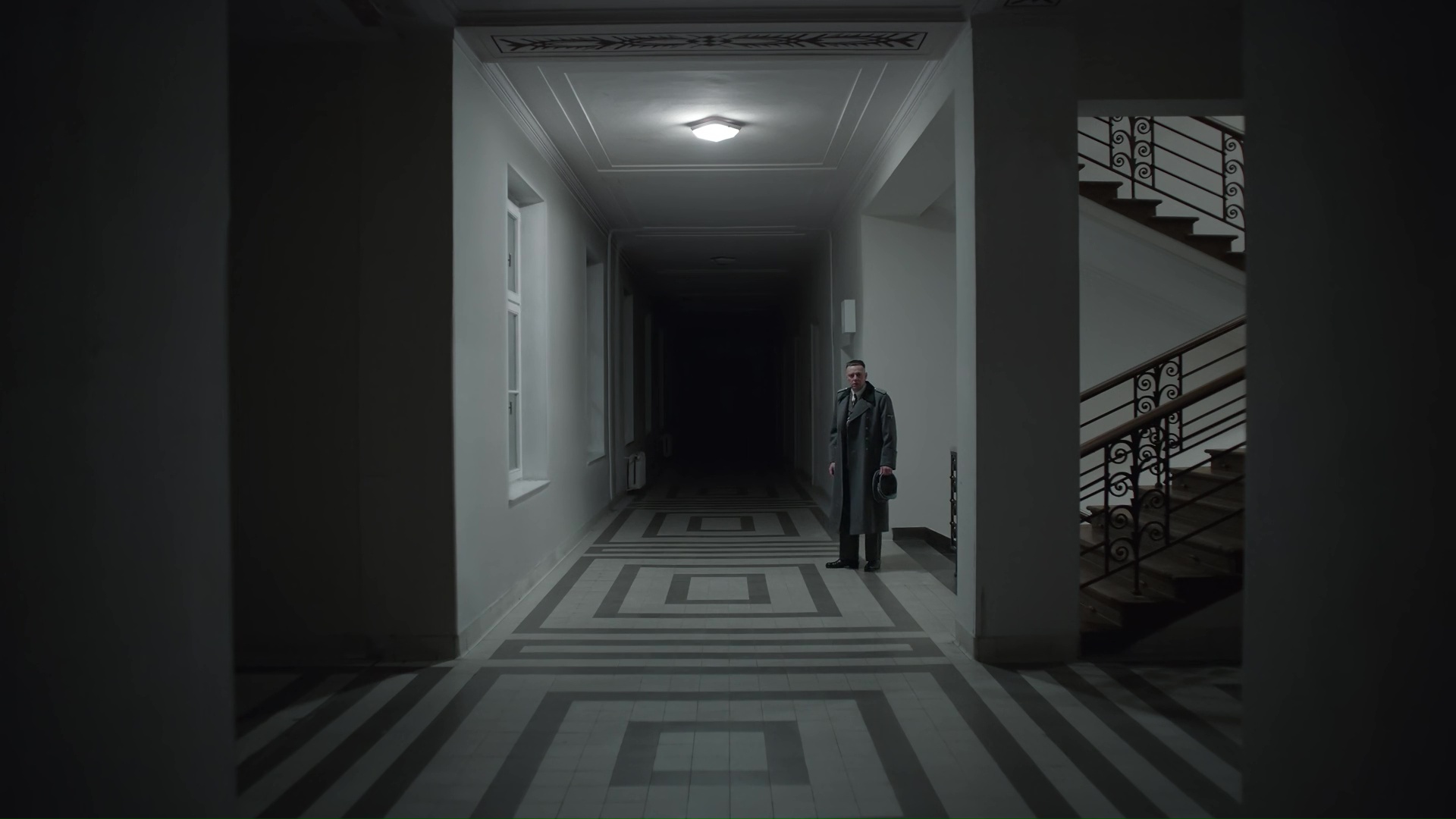
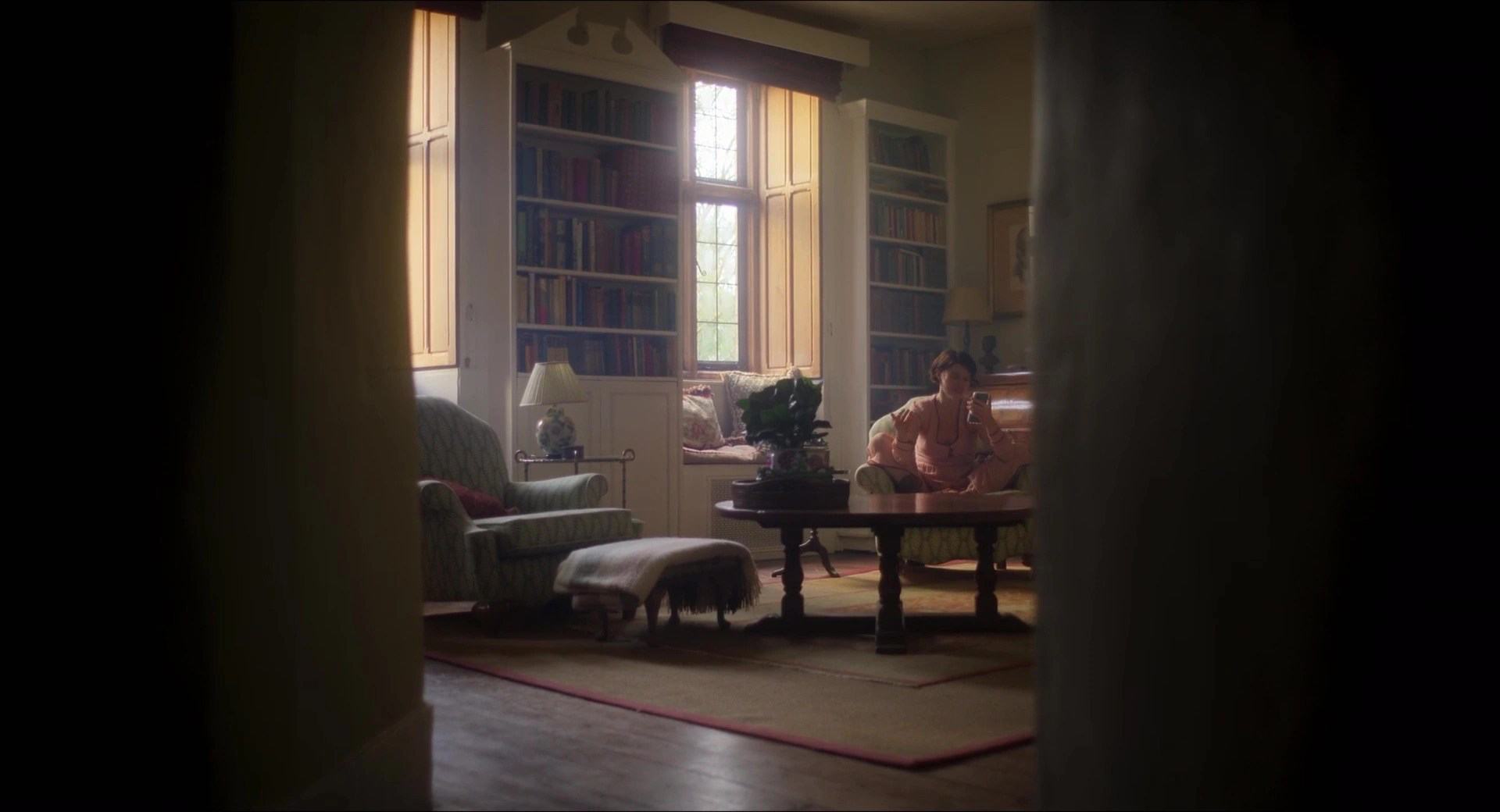
The Zone of Interest cultivates its aura of uneasy disgust by keeping the camera away from the characters. There are very few eyeline matches, or close-ups. Characters sleep in twin beds. The doubling motif is common but somewhat subtle. The static cameras in the house convey little logical space. The camera flips itself during key moments to mirror the scene and reflect the dual action at play. Quiet moments of expression like this dot the film and occur most acutely during a rare tracking shot across the garden with Hedwig and her mother. Characters don’t really see themselves in mirrors – a pointed stylistic turn that keeps them out of the realms of vision.
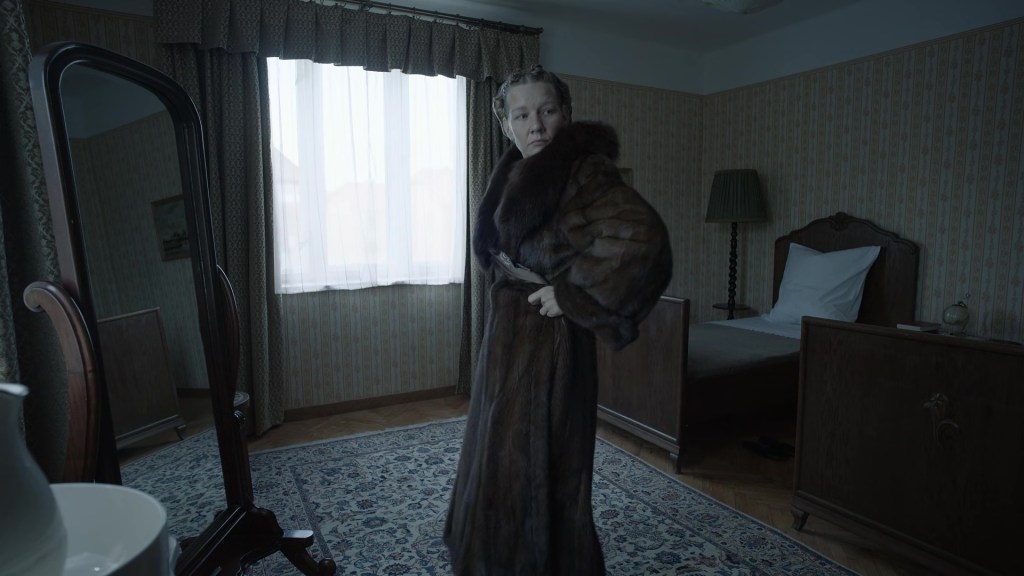
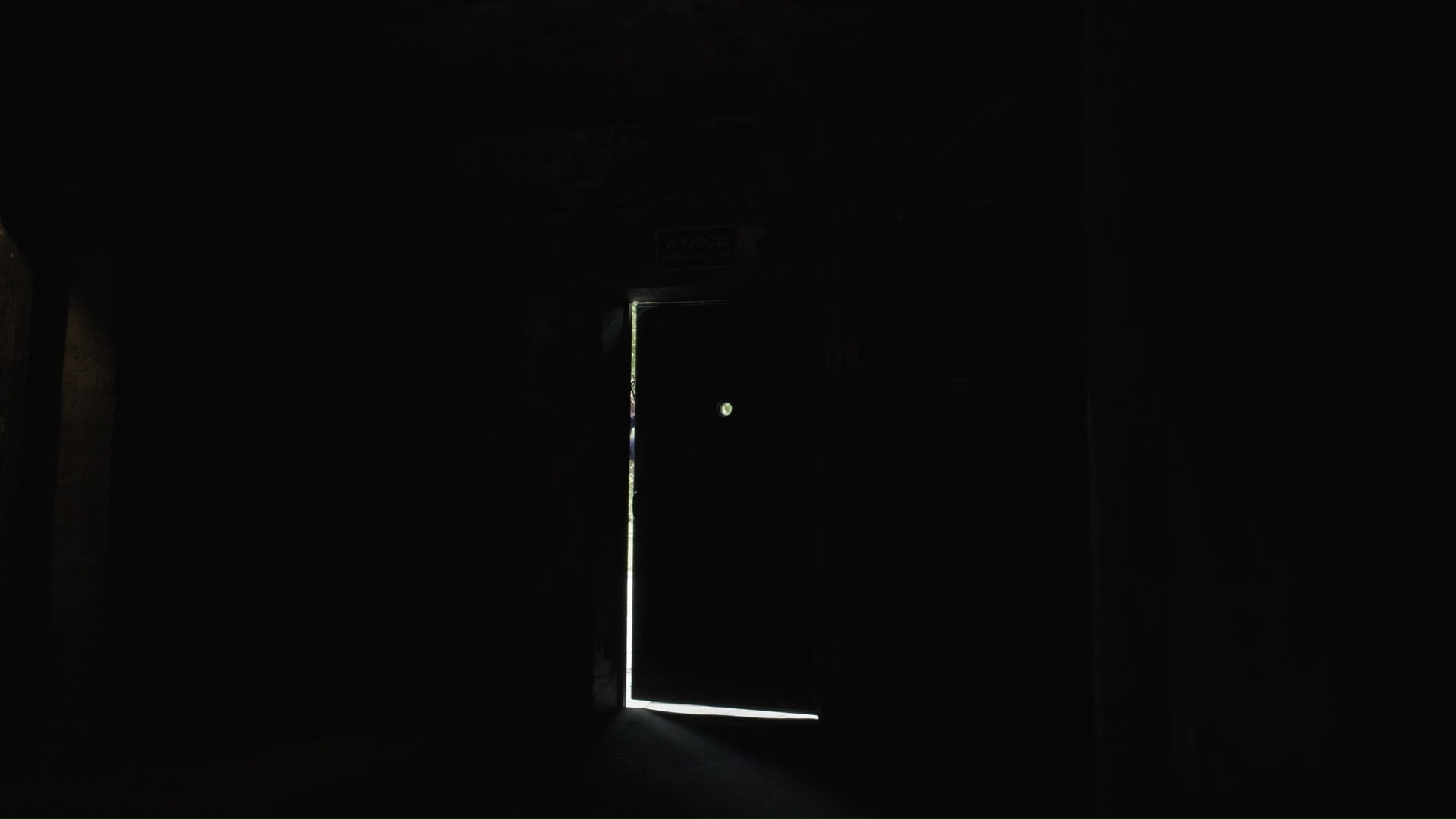
Such is to say: they cannot see beyond themselves to the horrifying events occurring just beyond the garden wall. Only the camera really knows what is happening. Which is sort of the problem. Everything has been outsourced to a camera-eye that assumes a specious gaze as one of history. One of the few eyeline matches occurs at the very end of the film – when Höss is walking down dark staircases during a Nazi gala and dry heaving every few steps. He stops and looks up at the camera – at us – and the scene cuts to a door revealing real footage of staff maintaining the Auschwitz Museum.

Such a historical gaze is assuming that the Höss family had some measure of capability to recognize what was happening and refused to do so. But that assessment totally misunderstands the nature of evil, and what we mean by the “banality of evil”. Because the banality of evil is not a refusal to see, it is a refusal to know there is anything to see because the psyche has been so captured. Evil becomes a way of life, and a reason to live. In 1945, with the allies closing in and defeat assured, the dregs of Nazi high command ordered the German people to fight to the last child – such was their dedication to the horror they wrought upon the world. Evil then becomes a question of the epistemological origin of emotion and action. The Zone of Interest is less concerned with the implications of that reality, and more concerned with a cinematographic exercise that seeks to comprehend evil as something without humanity behind it – turning the camera into an objectif that bears itself up as a documentarian of concept – but such is an unattainable vision – a mismatch between story and form.
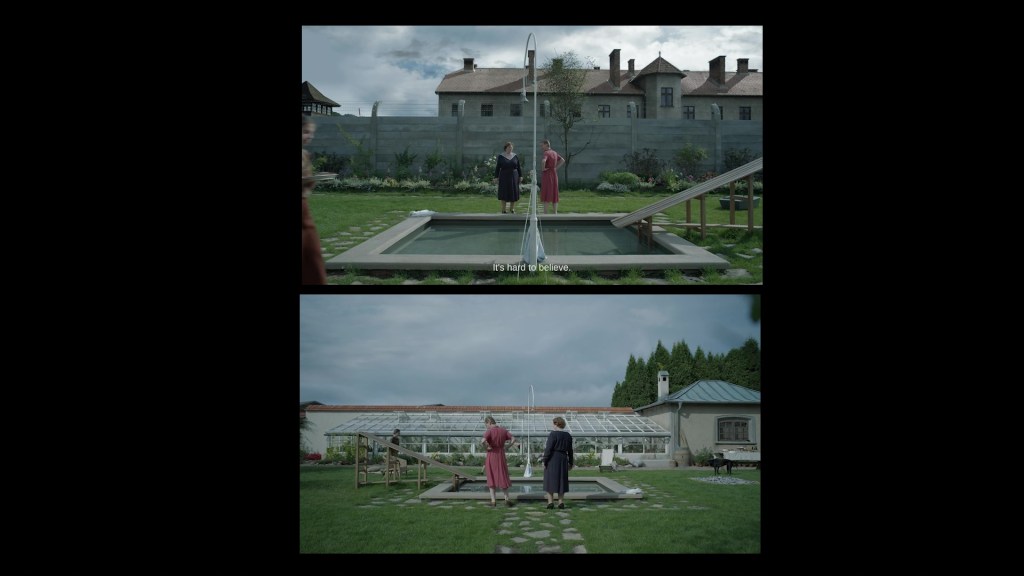
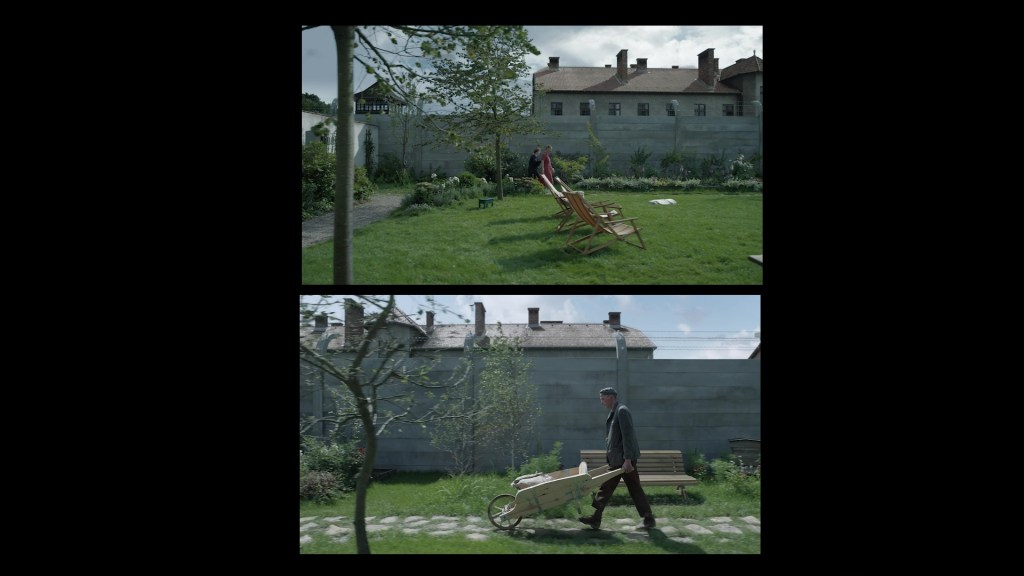
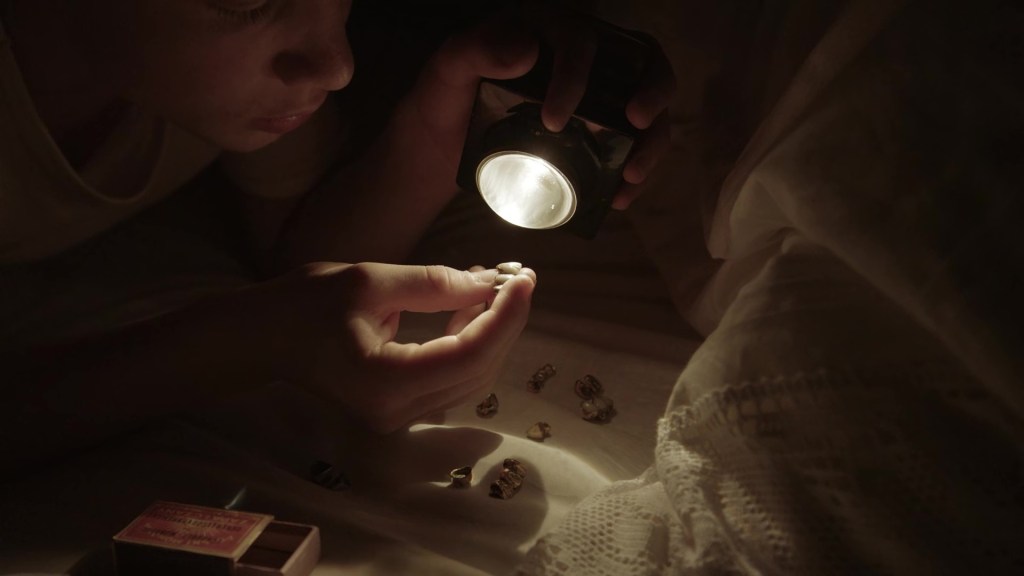
There is a total unreality to this film that is not native to its subject matter. The hyper excited formalism – there to embody the implicit evil of humanity – is much tamer than if the film had complicated our spectatorship by asking us to empathize with them. Some of it feels too much like a joke sometimes – like when one of the Höss sons is playing with human teeth in his room. It’s so winky – as if to say, “yes you are watching a film about the Commandant of Auschwitz”. It relies too much on recognizing the knowledge we have, and referencing things we know occurred, and can contextualize – like the ash from the camp furnaces being used to fertilize the Höss’ garden. The film treats its images as things that can reference a reality beyond themselves. As such they can only be understood on those terms. The image of the ash fertilizer means nothing if the viewer does not know the history behind it. In fact, it’s difficult for me to say how much sense the film would make to a person with no knowledge of WWII or the Holocaust. So, the film itself becomes an obscure object perpetuating the very refusal to see it portrays. It wants to say: “evil people are not ‘somewhere else’, they are right here. They live in houses, and they eat off plates.”

 Yet the aesthetic make-up of Zone does not speak to that beyond the superficial. 
Zone fails to bear up in respect of its subject matter because it does not comprehend the characters as real people – only avatars of history. In order to understand evil, we must understand people. Downfall, Oliver Hirschbiegel’s German-language Hitler (Bruno Ganz) in the bunker film – was powerful, and controversial, because it treated its subject like a real person. It complicated our spectatorship not by winking, or showing us gratuitous atrocities, but by looking at the nature of human psychology. All men are capable of great evil and that is the thing we need to comprehend, but Zone’s camera pre-emptively negates that possibility. The characters cannot even see each other. 

It is notoriously difficult to make a film about the Holocaust. How can cinema possibly comprehend the totality of man’s unstoppable, mechanistic, cruelty to man? I’m not so sure it can. I commend Glazer for trying. The filmmaking in Zone is virtuosic, and it will stand up on that alone. But as an entry into the canon of Holocaust cinema it leaves much to be desired. 
Review: Men (Garland, 2022)

“Men” is a feast for the eyes, but not for the mind.

It is easy to forgive certain films, especially horror films, that display a certain lack of expertise. That is: well intentioned film that fall a little south of what constitutes a robust story, or cohesive thematics, but makes up for it with some rollicking good horror. Barbarian (dir. Zach Cregger, 2022) immediately comes to mind. Then there are films like MenMen is so stylish, yet so devoid of original thought that one comes away from it wondering how exactly everything went so terribly wrong. 

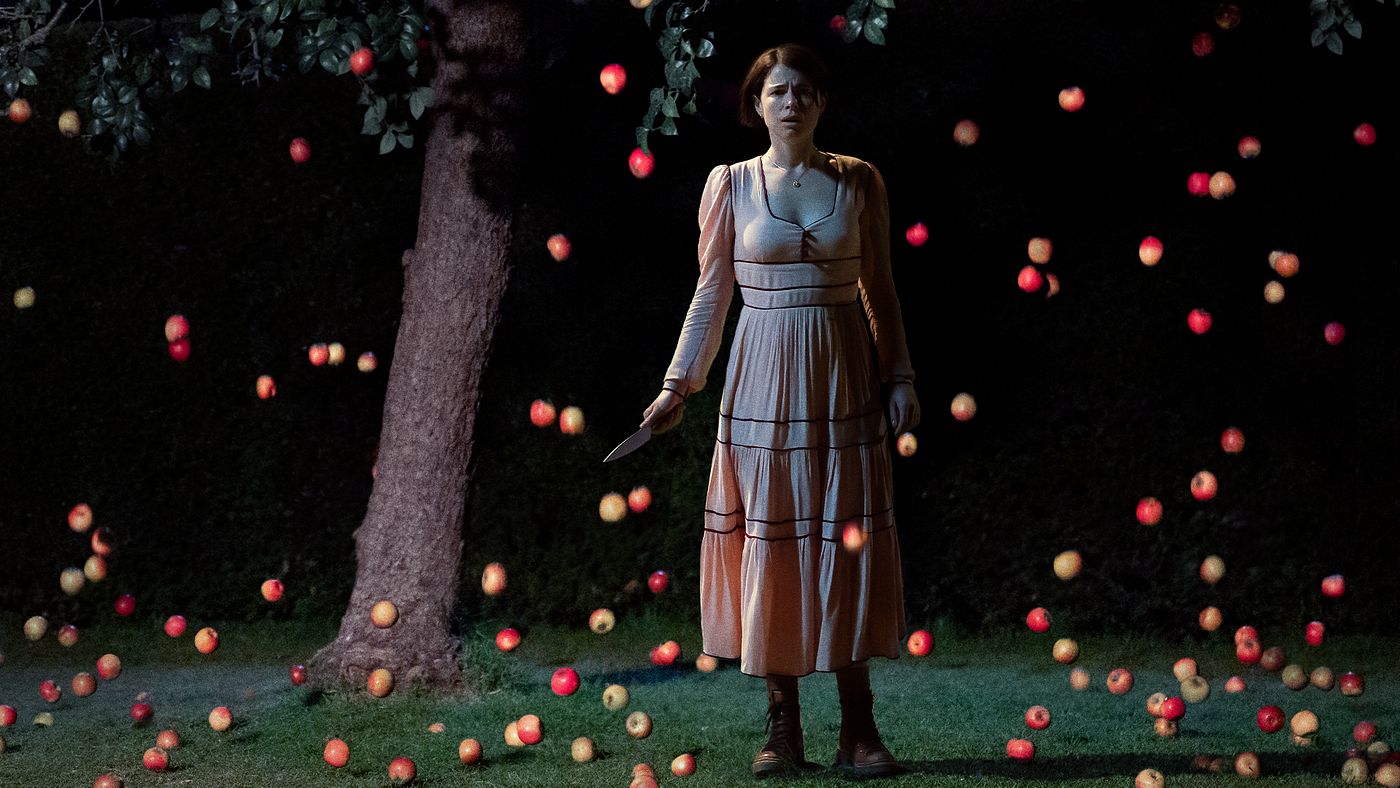
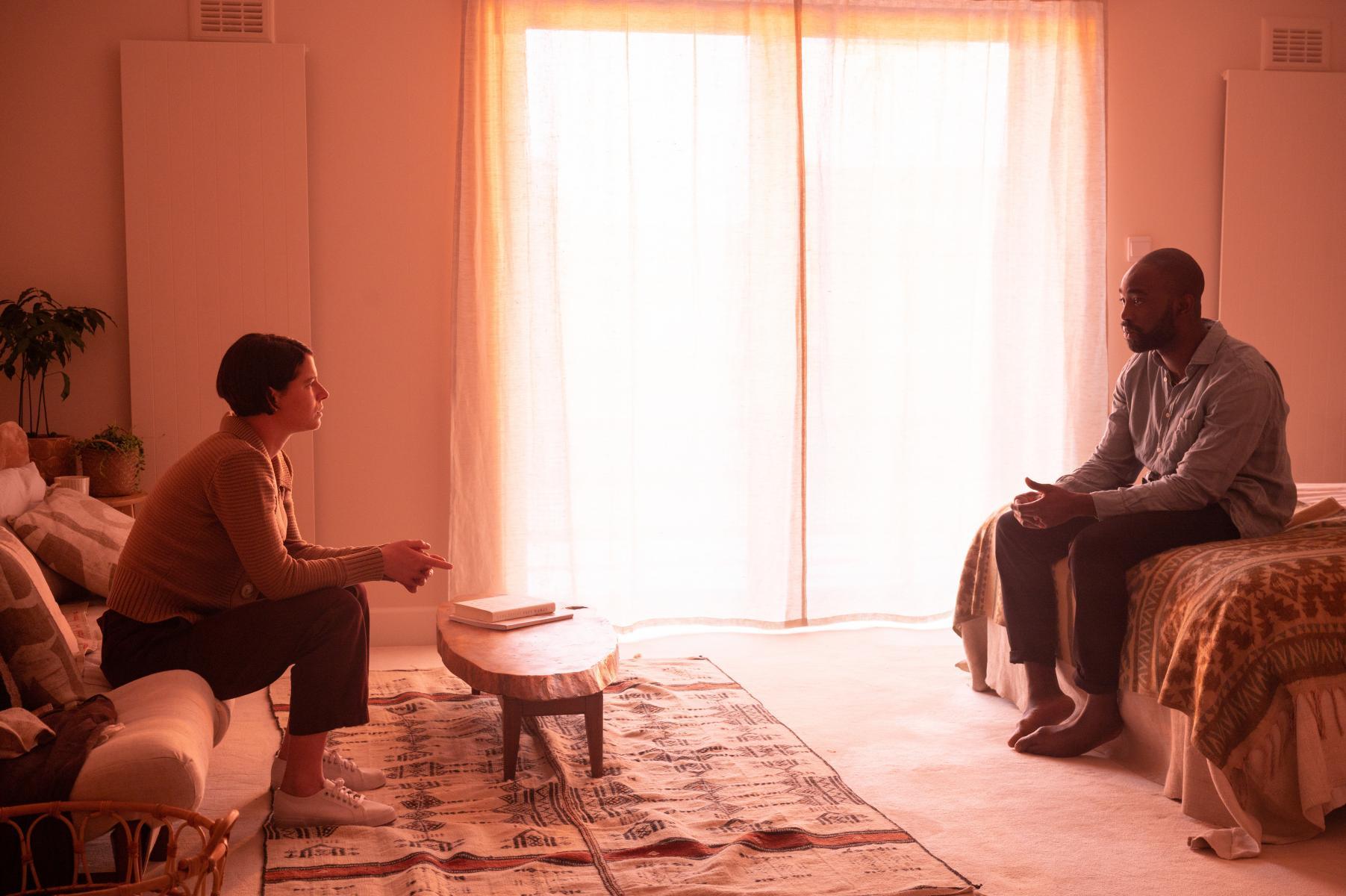
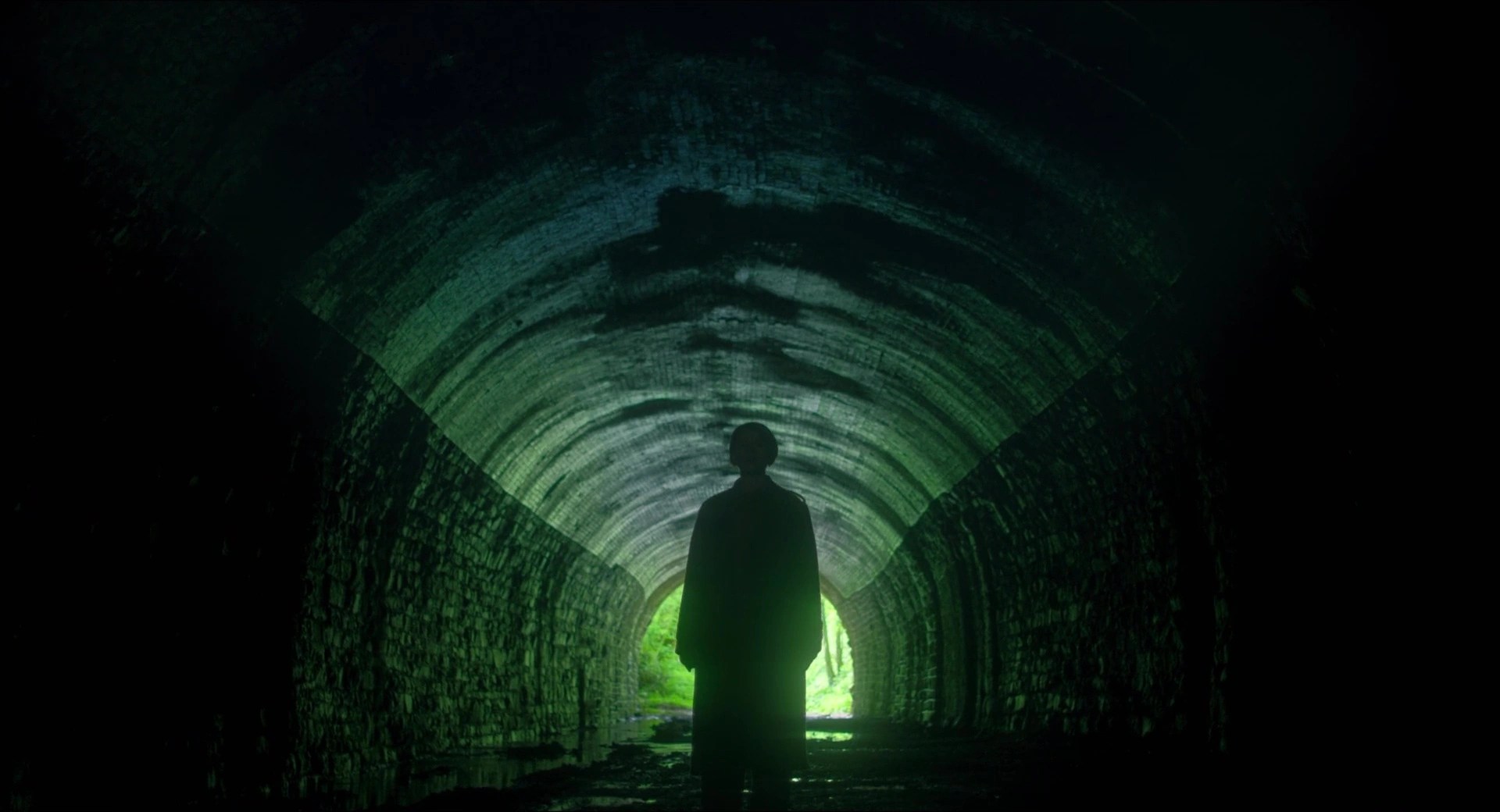
Harper (Jessica Buckley) is haunted by the suicide of her husband James (Paapa Essiedu). Like most haunted people, Harper decides to go heal herself at an isolated manor house in rural England. Surely a reasonable decision. Things start off just fine. The house is cozy, and the landscape is lush and quiet. The owner, Geoffrey (Rory Kinnear), notes the fine pub, just yonder, in the village. Things take a turn when Harper ventures out on a walk. The creep factor is ramped up to eleven during an extended scene where Harper stumbles upon an old tunnel where she happily harmonizes with herself by making echoes. Suddenly, a naked man appears at the other end of the tunnel, screaming and charging towards her. It’s a great scene, but it is rendered totally inert by what follows… which is more of the same.

It is difficult to understand what exactly this film is trying to say about trauma, about men, about women, or about anything at all. 

Literally, a parade of naked men who appear and disappear with absurd regularity. The story stops and starts at the tunnel scene. From then on, the film has nothing to say: not about Harper’s inner state, or trauma in general. Harper is just traumatized and guilt-ridden. Nothing else about who she is as a person is evident. Rather, her characterization rotates around the singular event of her husband’s death. Within that framework, it is difficult to understand what exactly this film is trying to say about trauma, about men, about women, or about anything at all. 

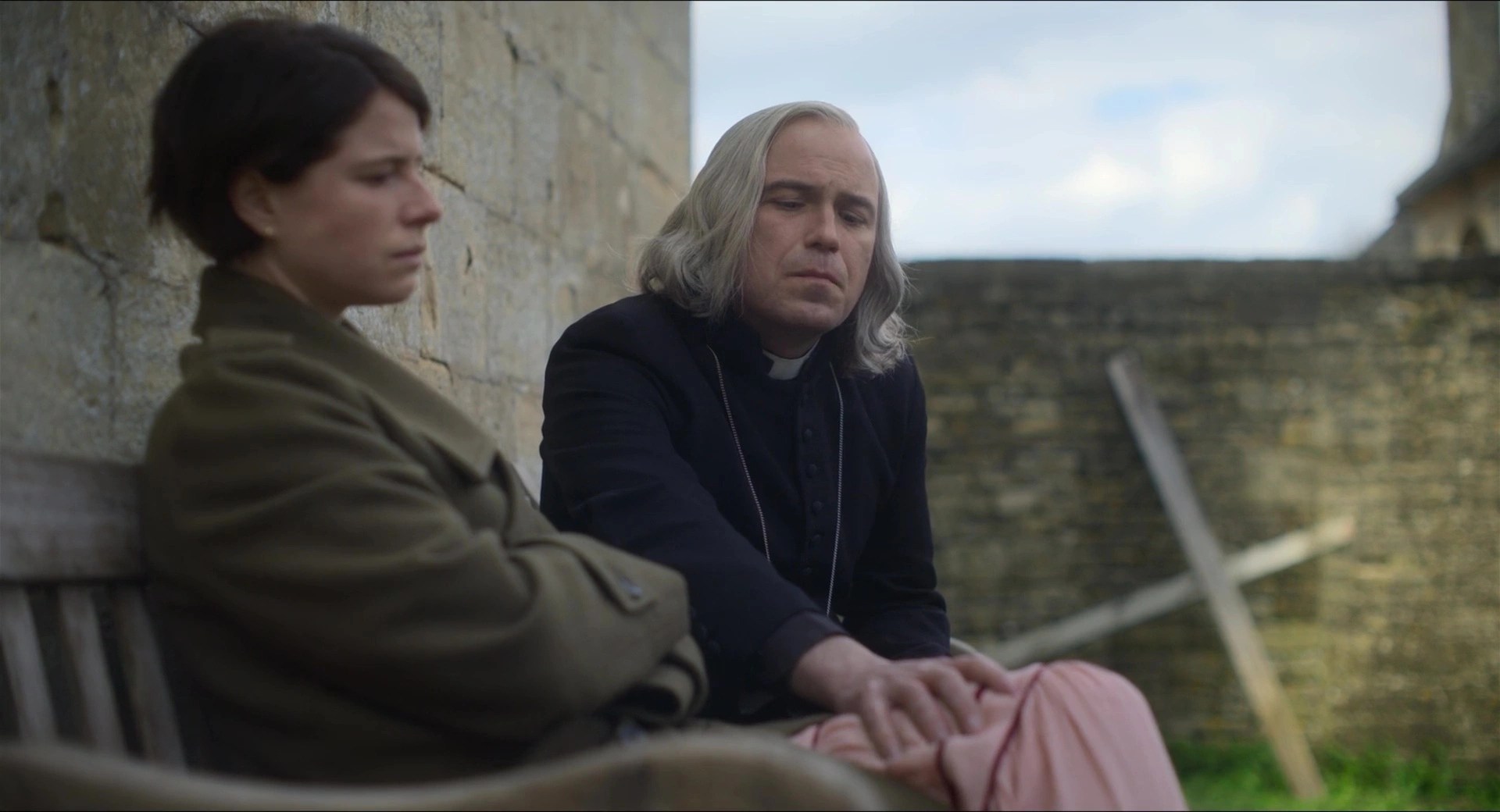
In the village Harper visits a very creepy church where she encounters more crazed men in the form of a teenager who invites her to play hide and seek, and a vicar who lays a hand on her leg and asks her how she feels about causing her husband’s death. For, surely, her refusal to allow her husband to apologize for striking her was the catalyst for his death. Or not.

Men appears to be under the impression that the experience of trauma is highly succinct, without nuance, and thematically soulless.

Maybe we would feel something of what Harper is feeling if the relationship with said husband had any, you know, background information. Instead, it appears that Harper was born on the day of her husband’s death. Born, apparently, into a world populated only by weird, hostile men whose favoured pastime is being naked and staring at her. Men appears to be under the impression that the experience of trauma is highly succinct, without nuance, and thematically soulless. Once you’ve had one encounter with a creepy naked dude, perhaps you’ve had them all.

*SPOILER AHEAD*

The film culminates in a wacky denouement wherein a series of (yes, naked) now pregnant men give birth to a bunch of other naked pregnant men who give birth to her husband. What the fuck.

That is, more or less, the extent of it. Harper feels guilty. Harper is haunted. Period. Surely, it is not that “men” are incapable of creating a nuanced horror film about a traumatized woman. One need only look to Midsommar (dir. Ari Aster, 2019) to see that certain directors don’t think the word “trauma” composes the entirety of the thematic life of a motion picture. Really, that is what makes Men’s failures so egregious. Being that it is ostensibly about feminine interiority yet experiences an alexithymic understanding of what impact such experiences actually have on a person.  

Men appears to be part of a burgeoning sub-genre concerning women whose husbands have committed suicide, and the haunting that follows. The Night House (dir. David Bruckner, 2020) immediately comes to mind as a much more successful foray that maintains the individuality of the main character while also containing striking, and potent thematic visuals on loss and grief. It seems silly to even bother commentating on the visual acumen of Men because the film is so stupid. Truly, there is nothing to see here but a parade of naked dudes. No thanks. 

Review: We’re All Going to the World’s Fair (Schoenbrun, 2021)

Between its refusal to resolve narrative expectations, and the aggressive restraint on characterization, the film comes to feel like an idea for a thing to say, rather than a fully functioning motion picture.

If I were to imagine We’re All Going to the World’s Fair as a physical object in the world, I think it would be a notebook. It would be a dog-eared little number, its leatherette cover flaking away. Cheap but well loved. It would be an object filled with personality on the outside. If World’s Fair gets anything right, it’s just such an aesthetic. Beyond its fixation on a particular flavour of teen angst, World’s Fair does not work very well – using an approach that is often aggressively elliptical, and fails to take chances. Surely, this gen z tone poem was not built for me, but if it worked, that wouldn’t matter at all. 

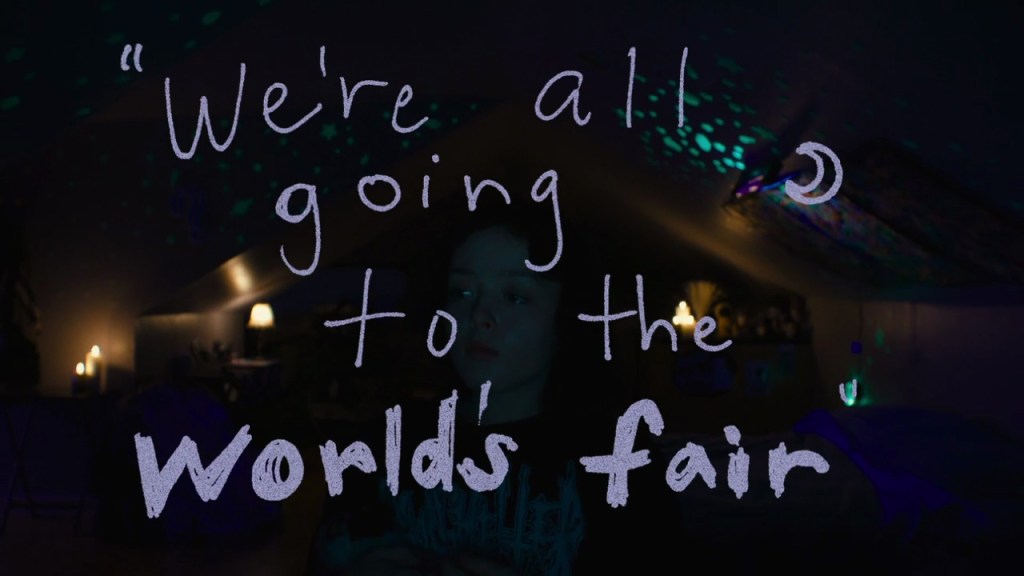
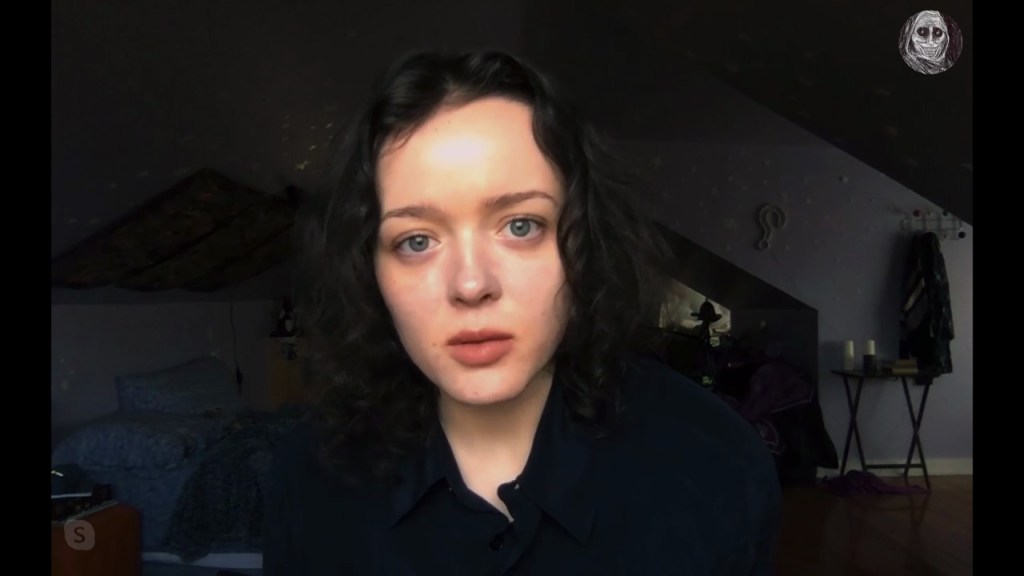
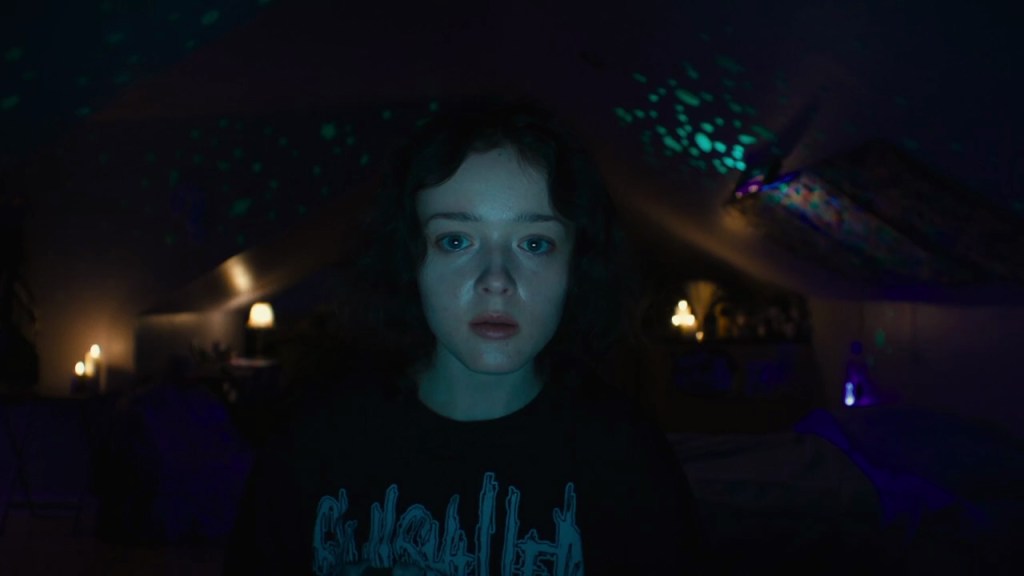
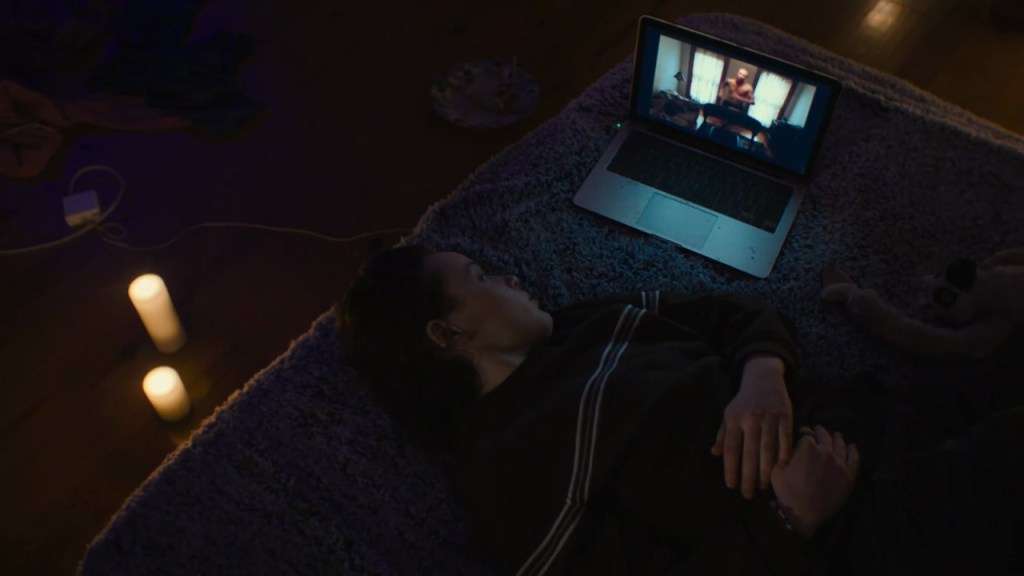
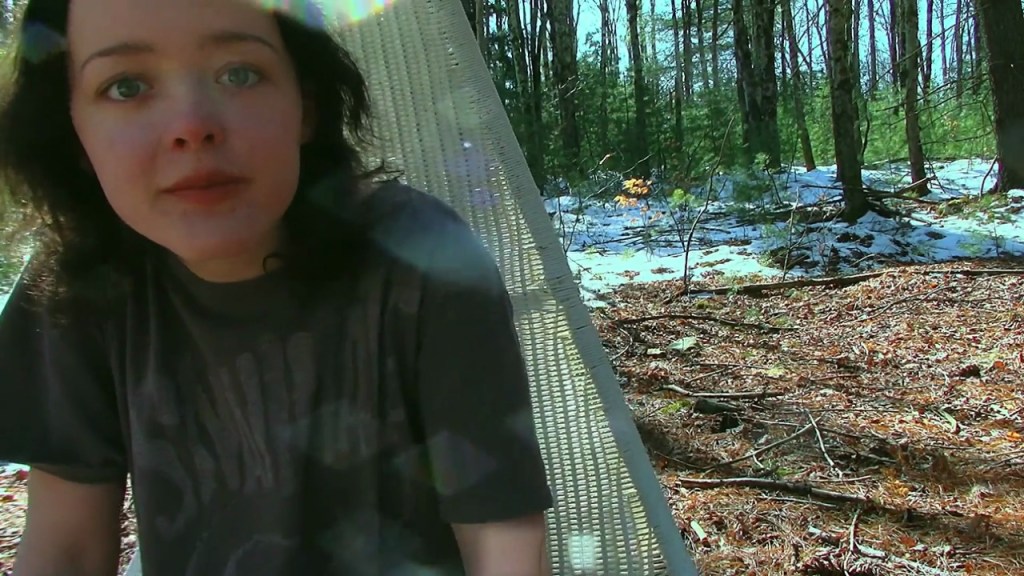
Casey (Anna Cobb) is a lonely wanderer, an isolated teenager. Her social interactions are restricted to her phone, and laptop. Nary do we see another character, friend, or foe, but from the glow of Casey’s screen. Over the course of the film, Casey becomes fixated on playing a game – We’re all Going to the World’s Fair – where players evoke some class of entity, then document the changes happening to their bodies, and consciousness, via video posts. Her activities draw the attention of a fellow player – an older man by the handle JLB. 

Nothing much happens in World’s Fair. The film takes an elliptical tone, and tacitly refuses to resolve anything it brings up. Such a papery adherence to the narrative falls flat insofar it is extremely difficult to care about, or understand, Casey. Casey occupies the screen about 90 percent of the time, and yet we are not aligned with her. Her immaturity, the way she chooses to spend her time watching drivel online, coupled with a lack of character development, or other characters, makes the whole thing really very dull. It’s like that notebook with the flaking leatherette cover- but when you open it the pages are blank. 

Simply, World’s Fair’s interrogations of moving image media are about as paper-thin as its narrative, and not approached very creatively.

These stylistic decisions have a point – and yes I’m aware of the horror subculture it is lampooning – in respect of moving image media, the blur between fantasy and reality, and the illusion of sociality before a screen. There’s a certain something to be said about Casey falling into the online vortex as if accessing the spirit realm, but that’s another thought-tree entirely. Simply, World’s Fair’s interrogations of moving image media are about as paper-thin as its narrative, and not approached very creatively. The audience is taken in and out of computer, and phone screens, the totalizing effect being that we’re just watching videos inside a movie. 

If one considers World’s Fair in its hybridity – as a narrative occurring in both the material world, and online, one may ask why it limits itself to the surface of actual screens as the totality of its representational power. Why not exploit the lo-fi narrative to really go deep on that line between fiction and reality? It’s like the filmmaker left themselves a wide-open space to experiment but forgot to show up. Long shots of Casey staring at her laptop set a tone, but it just goes on like that. Do we really need a whole movie about what it feels like to chat with strangers on your computer late at night? The film never proves itself clever enough to subvert the aesthetics of the thing it is satirizing – which seems, to me anyway, a little bit important if your aim is to critique, or comment, or whatever. World’s Fair caves to the yawning time dilation that occurs between a depressed teenager, and the tumult of her feelings, but totally subverts its strength as a tone poem by taking itself on as an academic think-piece. Between its refusal to resolve narrative expectations, and the aggressive restraint on characterization, the film comes to feel like an idea for a thing to say, rather than a fully functioning motion picture.

Between its refusal to resolve narrative expectations, and the aggressive restraint on characterization, the film comes to feel like an idea for a thing to say, rather than a fully functioning motion picture.

 The ellipticity comes out as deliberate, contrived, and joyless. The world of the film is totally uninteresting. Its narrow focus on Casey is to the exclusion of anything else, and just who is Casey? Am I supposed to believe that she knows no one, and never talks to her parents? Loneliness isn’t a personality trait. Casey’s isolation, and alienation, would feel much more immediate, pressing, dare I say, important if there were some contrasts between the world, and her subjectivity. It’s as though World’s Fair wants to say something, without saying it at all, while depriving itself of the means to say it in any case because it’s too stripped down. It falters between approaches solemnly, and humourlessly. 

Or maybe I just don’t get the humour. Many who approach this film come away saying that it wasn’t made for them, and that’s why they did not like it. I think that’s stupid. People in their 30’s are not so culturally distinct from a teenager like Casey that they can’t understand the movie. Maybe the movie just isn’t very good. Maybe the movie is a debut feature by a talented filmmaker still trying to find their voice, and not a rarefied cultural object. Not yet anyway. Director Jane Schoenbrun has a film coming out this year – I Saw the TV Glow – early reviews at SXSW are positive, but some highlight similar issues to World’s Fair. In any case, TV Glow has more than one character, and I’m keen to see how Schoenbrun functions in a more dynamic cinemascape. I could surely not recommend World’s Fair but to the most fanatical lo-fi aficionados, lovers of tone poems, and those who need an entire movie about what it feels like to chat with strangers at night online. Surely, none of us film lovers got enough of that when we were Casey’s age. Time to relive it.