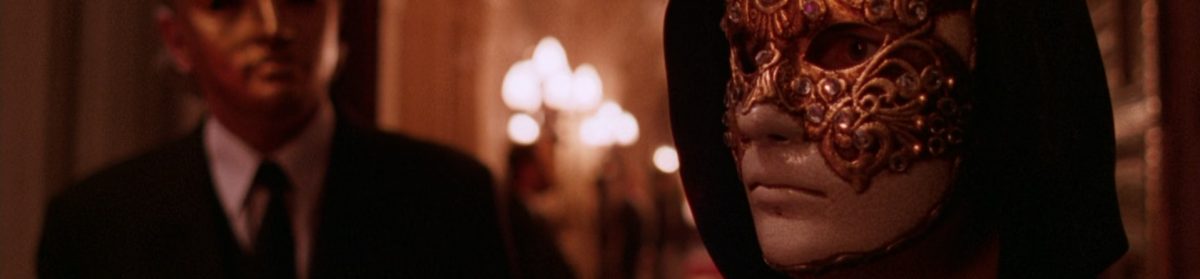
Review: Smile (Parker Finn 2022)

Somewhere deep beneath the title wave of repetition, flat characterization, and woefully unsubtle allegory, is a tight thriller about trauma that could have been.

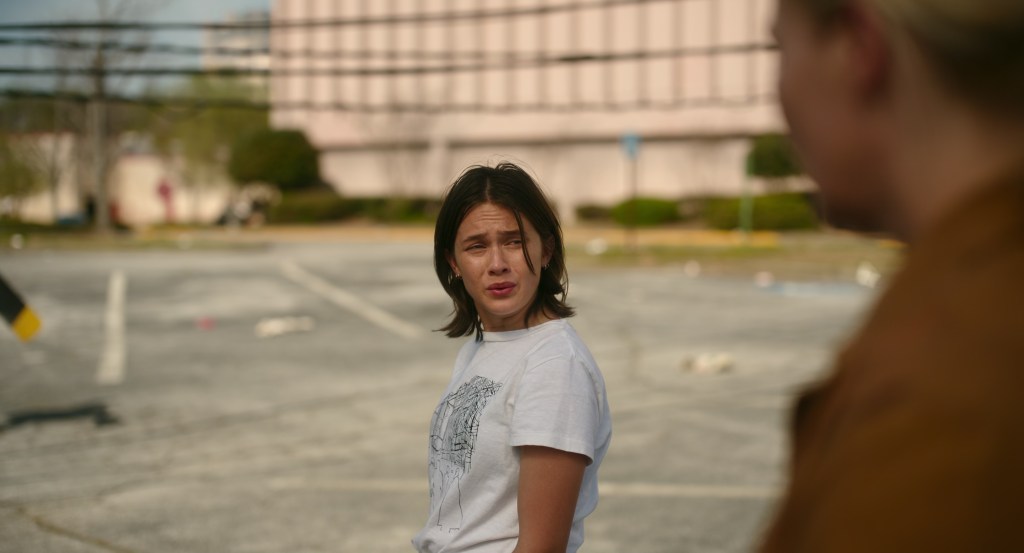
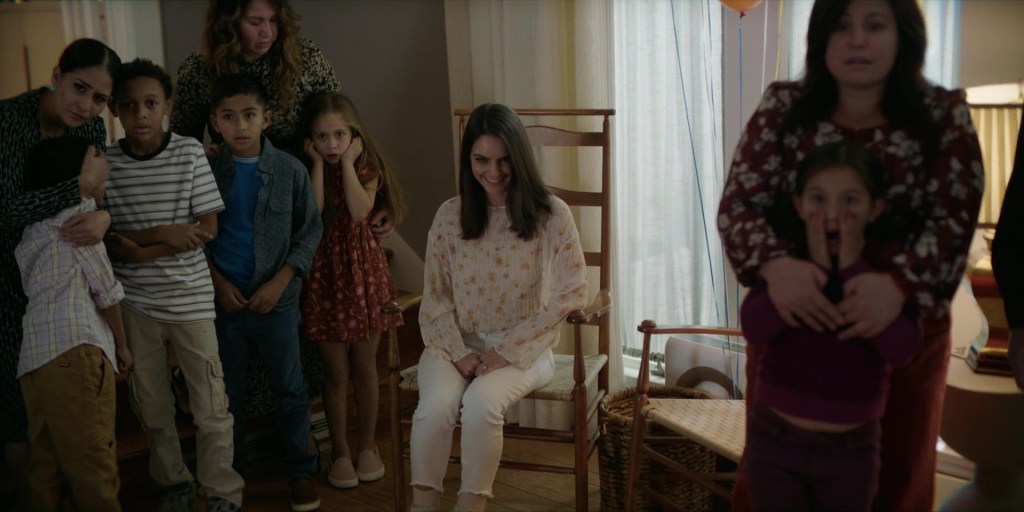
After witnessing a patient’s gruesome suicide, Dr. Rose Cotter’s (Sosie Bacon) life is turned upside down by the sinister appearance of the ubiquitous ‘smile’ of the film’s title. The strange and violent occurrences pile up, setting Rose on a collision course with the haunting memory of her mother’s suicide. 

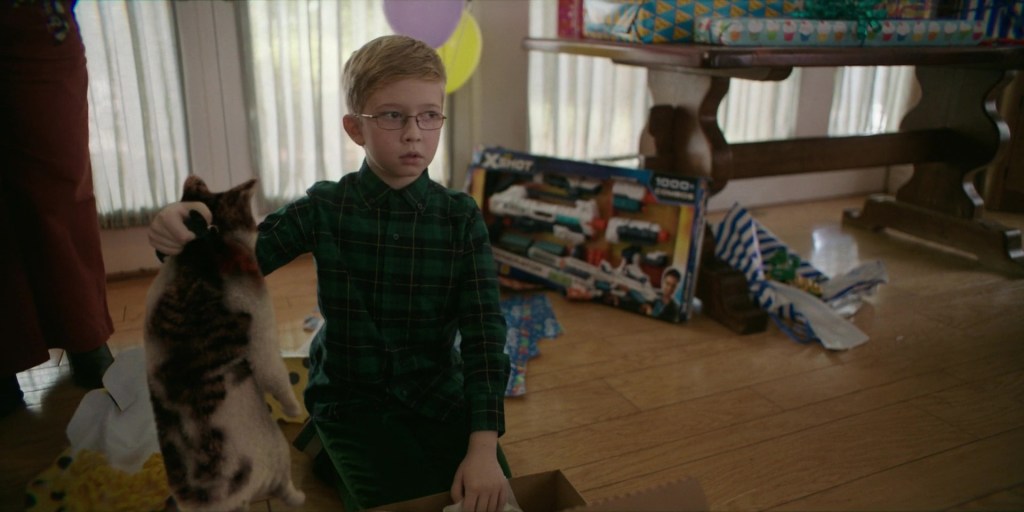
Right, so in the interest of transparency it seems correct to drop the flowery prose and say that this film is quite stupid. Its premise is the best thing about it. A premise in execution that can be summed up by the conclusive metaphor of bludgeoning yourself to death with a hammer. Following the suicide, Rose experiences hallucinations, and creepy weird shit happens (dead cat birthday present). Her partner Trevor (Jessie T. Usher) and her sister Holly (Gillian Zinser) abandon her with somewhat minor provocation. Naturally, when our loved ones start acting oddly our first instinct is to cut them out of our lives! I could buy this symbolically for the isolation of traumatic stress. However, it’s mostly used as a plot device that abjures the script from the task of characterization in numerous endless and repetitive scenes of Rose trying to convince her loved ones to listen to her.
Rose eventually allies with a police detective who does believe her. Joel (Kyle Gallner), a cardboard cut-out of the finest variety, is the generic pre-requisite for Rose’s investigations. Then there’s Dr. Desei (Kal Penn) Rose’s supervisor at the hospital. Dr. Desei is so devoid of life he could have been played by a dead pot plant. His lines consist wholly of (repetitive) scenes where he tells Rose to take a rest. The scares are repetitive too. Characters smile that evil smile and then do something fucked up.  Over and over and over again. It’s difficult to understand why this film needed to be nearly 2 hours long when one considers its totally tapped for ideas after about 30 minutes. As a vehicle to explore the real-world effects of trauma it could have been so much more. It’s a rich topic, universally relatable, endlessly frightening, and sometimes life affirming. What we have instead is a hammy not-so-scary festival of never-ending cynicism and repetitive scenes topped off by an ending that might make you want to become unalive yourself. If the teaser trailer for Smile 2 is any indication, the sequel is offering more of the same.
Review: The Lost King (Stephen Frears 2022)

The pseudo-romance between Philippa and her fantasy Richard III is lovely. That aside, The Lost King contains zero surprises, and the script is uneven.

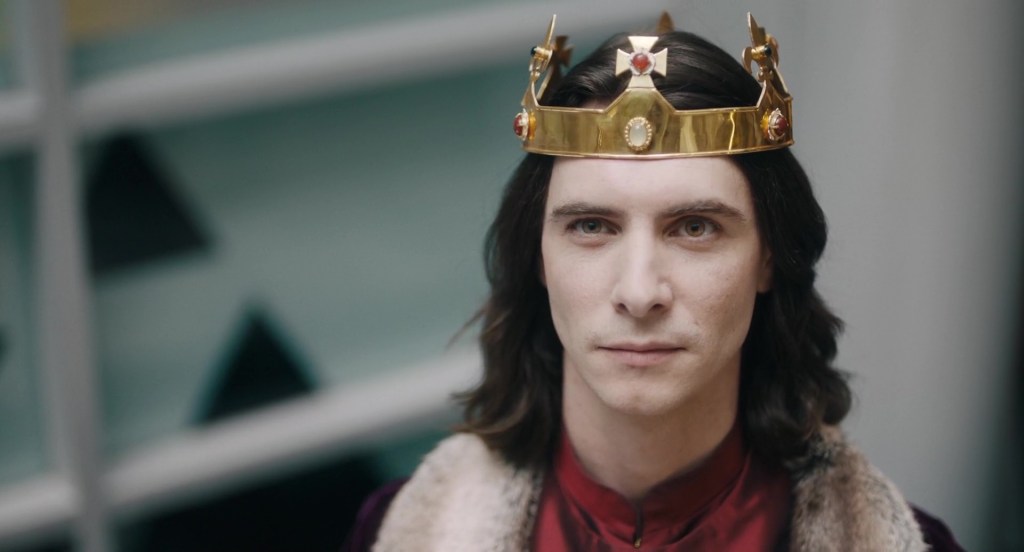
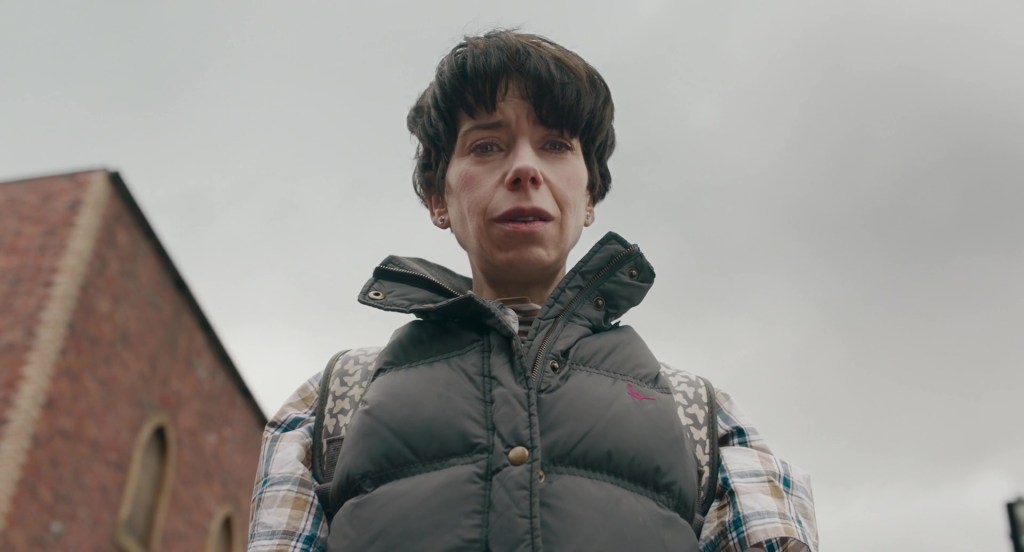
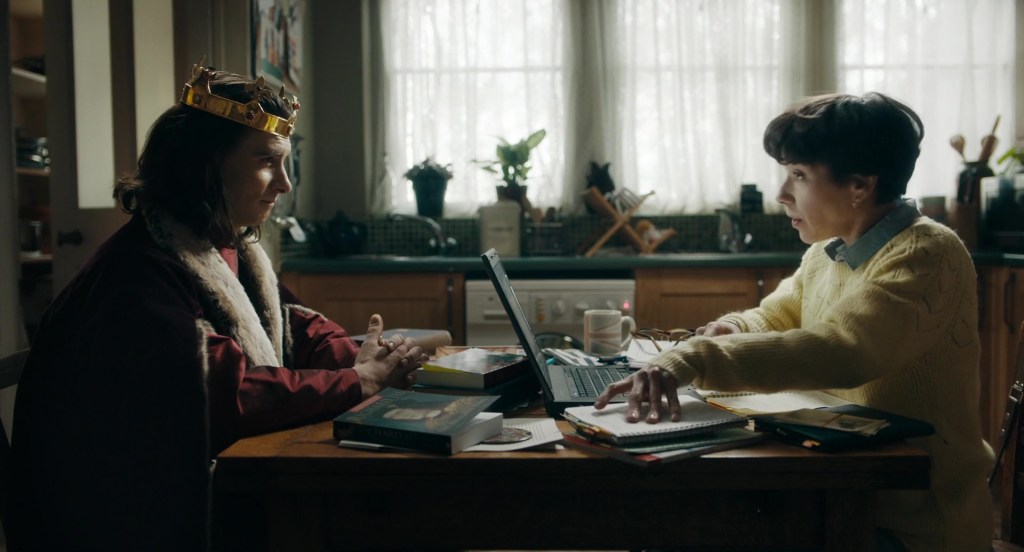
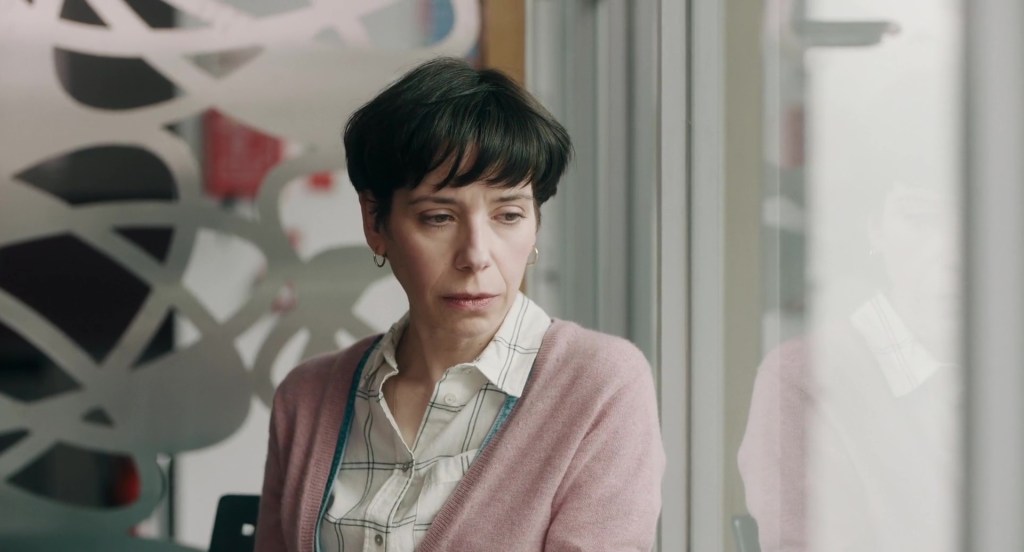
Adorable yet slight is about the only way to describe Stephen Frears The Lost King staring Sally Hawkins as Philippa Langley. Langley became known for her part in the discovery and exhumation of Richard III who was discovered under a parking lot in Leicester 2012. Langley also participated in the resuscitation of Richard III’s reputation by exposing its most egregious reportings as Tudor propaganda. Hawkins plays Philippa as a mousy nervous sort of woman afflicted by chronic fatigue syndrome and a fantastic guilt complex. Her connection with Richard III is born out of her own feelings of being misunderstood, and underestimated. She loses out on a promotion early on in the film because of her illness. The conveyance of her relationship with the king is the most pleasant part of the picture. Richard III (Harry Lloyd) appears to Philippa as an interactive apparition in the body of the actor who played him on stage. Philippa is entranced, obsessed, and maybe even a little bit in love.

Aside from the cute fantasy romance The Lost King unsurprisingly contains zero surprises. The first act starts off interesting enough. The excited oddities of the Richard III Society are amusing but overused in the service of exposition. Such is no doubt helpful to those of us unfamiliar with the history, but it’s a lazy use of screentime all the same. The middle is narratively stagnant: filled with handwringing, phone calls, and prevarications over support and funding. Some genuine tension occurs during the archeological dig when it is unclear that the first skeleton uncovered is indeed the lost king, but that’s about it.

Sally Hawkins is about the only thing that makes this mediocre film watchable. Her performance as Philippa has a lived in texture. Philippa’s fight against her own insecurity, self-sabotage, and the role played by other’s perceptions of her, are tender and relatable. The Lost King is a good-natured film with nothing much to offer but an inspiring story and an above average performance by Hawkins. I would, however, expect a bit more from Frears in the screenplay department considering his prior credits.

Civil War’s Amnesia

There is nothing worse then an unserious film taking itself too seriously. Civil War has all the quality of a mid-tier episode of The Walking Dead.

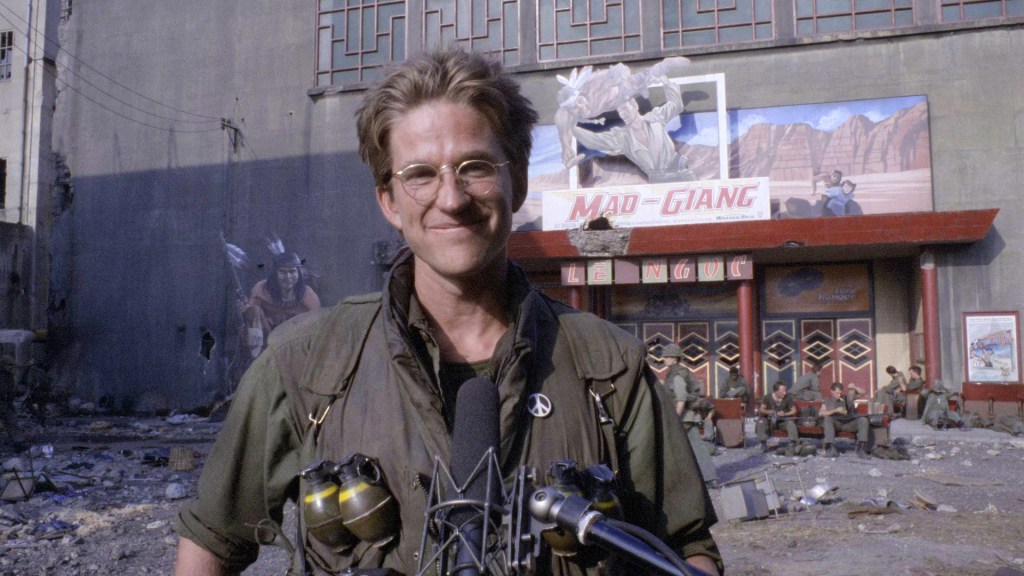
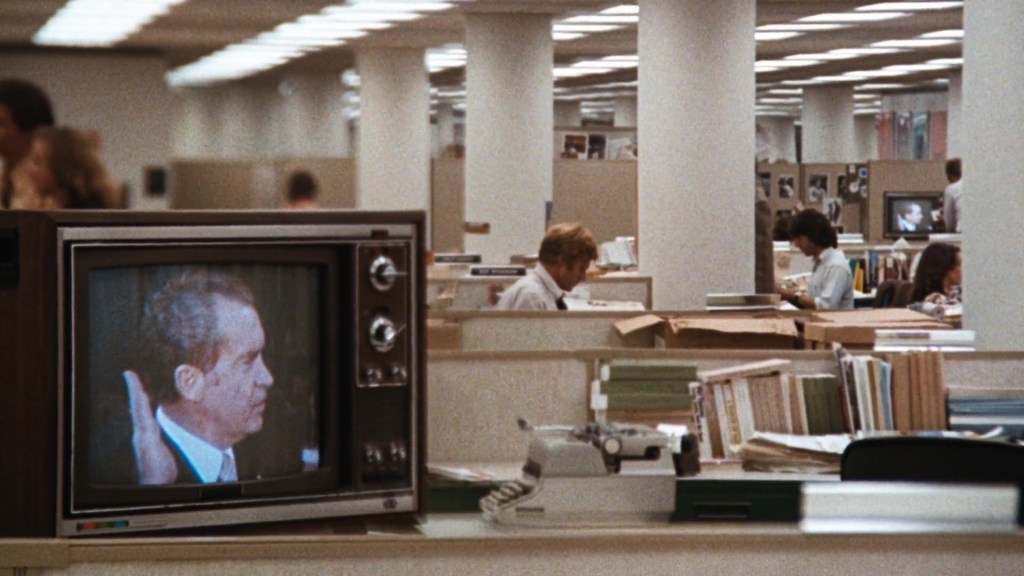
It has been a long time since the likes of Stanley Kubrick, Robert Altman, and Hal Ashby, et al, were on hand to make searing artworks on the hypocrisies of the day. American political cinema of the 1970’s and 80’s was a beast. Take Private Joker (Matthew Modine) in Full Metal Jacket when he stares down the camera to tell us about all the “exotic” people of an ancient culture he has come to kill. The irony of his words cut like a knife through post-Vietnam America. Then there is the slow-zoom out in the final scene of All the Presidents Men. It presents a titillating tableau: Nixon’s inaugural ceremony blares on the television while Woodward and Bernstein bang out his downfall on their typewriters. Sidney Lumet’s Network lampooned greedy TV execs, so desperate for a bloody scoop that they onboard a murderous domestic terrorist group. These films are powerful because they make powerful statements about politicians, war, American myth, journalism, and the discursive power of screen media. Moreover, they’re not afraid to make those statements. They exist on a continuum of thoughtful cinema that bypasses partisan nonsense and cuts to the very core of our human concerns in the 20th century: the difference between war and murder; truth and lies; news and a paid fabrication.

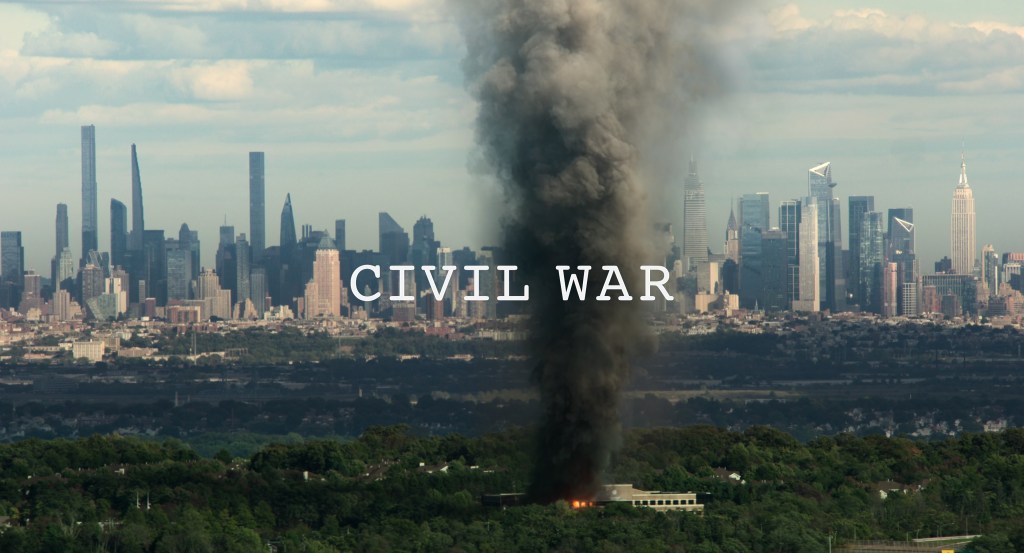
I say all this to juxtapose these earlier masterpieces of political cinema to the lukewarm offerings of the 21st century: Alex Garland’s Civil War. Civil War is so toothless, sloppy and risk adverse that it says nothing at all. And I don’t think it’s because the film doesn’t want to make a statement, I think the film is too stupid to come up with one. It’s capitalistic excess at its very worst: a film trying to take advantage of a very specific cultural moment while offering no salient commentary or satire. It’s less a political cinema than a reactionary one.


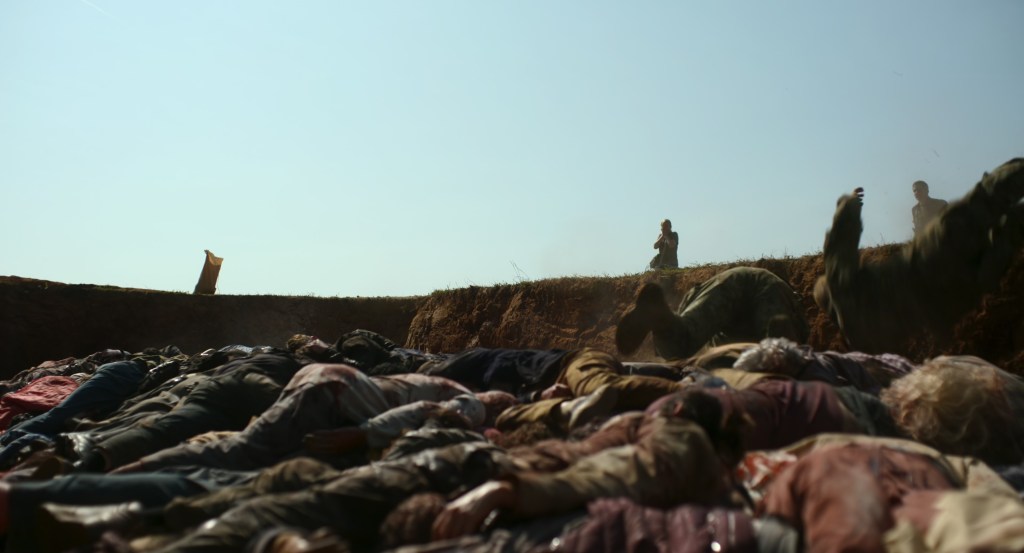
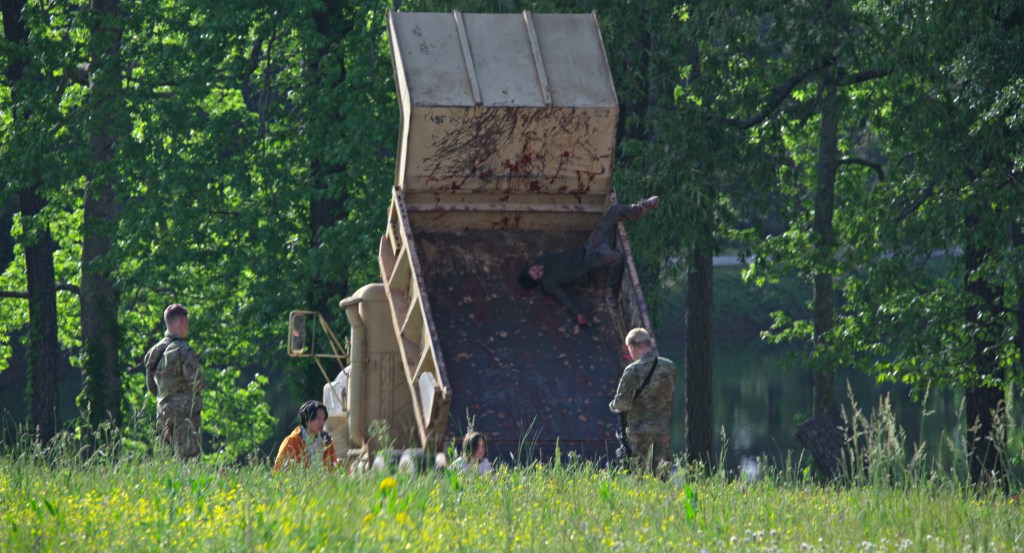
Not only does Civil War embody no memory of its political forebears, it presents itself as a road movie with barely a concept of a road movie. A group of photojournalists must drive to Washington D.C. in time to document the “Western Alliance” capture of the U.S. president. Each situation they encounter on the road is more anonymous than the last: a gas station full of rednecks holding faceless hostages; commando Jesse Plemons waving a gun over a mass grave of more faceless people; a booby-trapped Santa’s Village.

Garland misses a vital and obvious opportunity by merely placing this film on the road with no impression of American road films. Get Wim Wenders on the horn. Think of Paris, Texas, where the road imagery links the viewer to Travis’ (Harry Dean Stanton) fractured family and identity. Think of Thelma and Louise where the characters encounter people and situations that directly reference their actions and the themes of the movie. This is basic stuff. The characters in Civil War mostly encounter random things that have anything to do with them. No one is making choices. The bones of the story have osteopenia: the characters are just driving to D.C. and running into stuff. Is there some grandiose symbolism regarding political polarization, new screen media, the United States, and Santa’s Village that I am missing here? Doubt it.

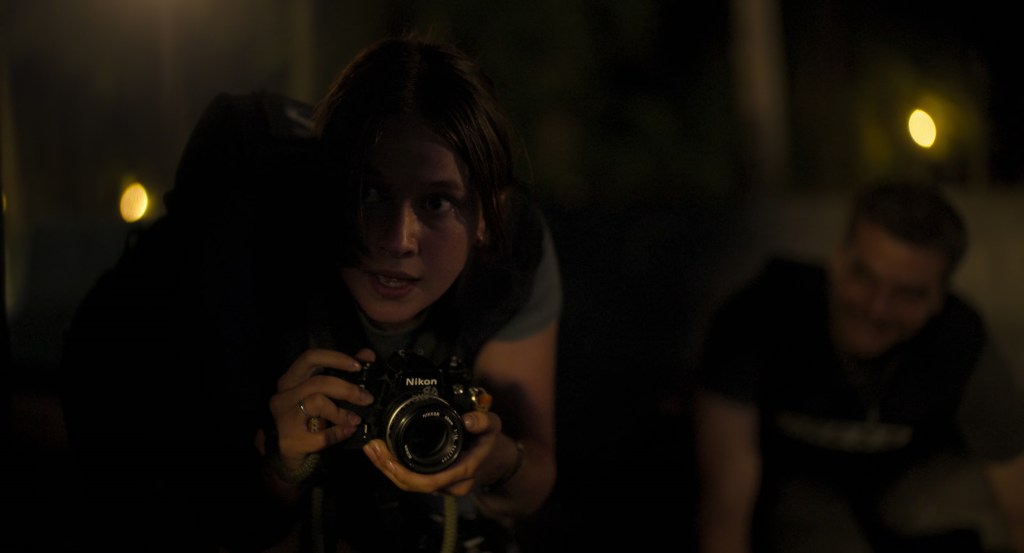
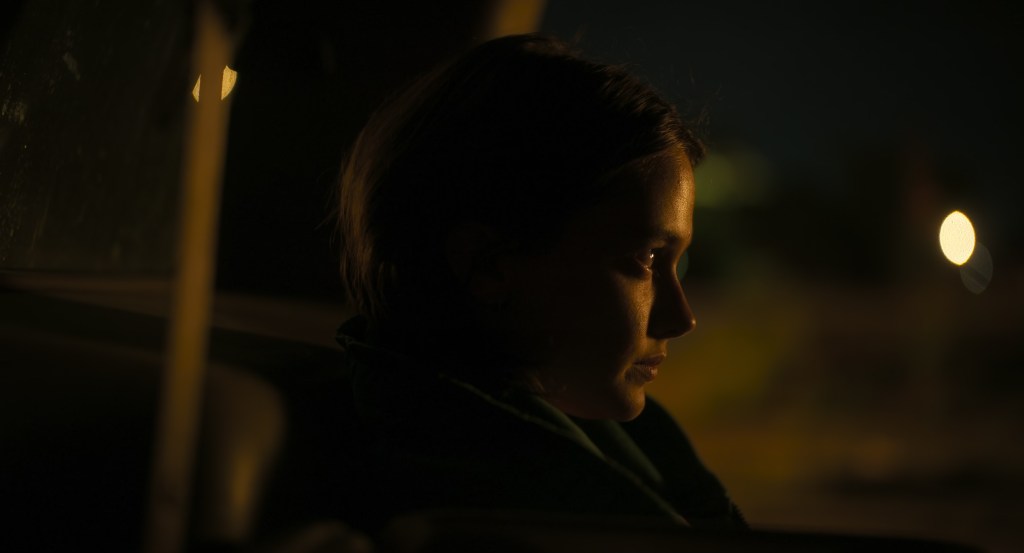
The characters are not much better. Lee (Kirsten Dunst), saddled with a perpetual look of determination, plods through the film, dispensing oh-so-adroit wisdom to the ingénue la photographie Jessie (Cailee Spaeny). The other leads make even less of an impression, and the characters who die are just red shirt inserts designed to take bullets. Such missteps lower the stakes in a film where everything should be at stake. Civil War also cannot handle a bit of logic surrounding its most important story objects. Why is Jessie shooting and hand developing 35mm film in a war zone when she doesn’t have to? Why is she shooting with that camera at night? Surely, both of these are suboptimal uses of her time as a photo-journalist. Half her pictures would be blurry and under exposed. The object negates its own meaning if you can’t imagine why it’s there in the first place.

And it just goes on like that. It might take a leap of logic to imagine what sort of militia force would let journalists take photos of them murdering unarmed people. You may then ask yourself why such blood thirsty cretins wouldn’t just murder the journalists too.  Couple these preposterous scenarios with very bland filmmaking and you might have the most forgettable political thriller ever made. It looks like an advertisement. So many shots are in shallow focus and also in the dark. If that’s what you’re doing, why not just shoot the whole movie on an iPhone? It’s cheaper.

What is the consequence? How are the actions of the characters driven by an engagement with media? The entire point of critiquing journalism in a film such as this is because it is a matter of tremendous consequence. But here, visually and narratively, the audience has nothing to grab on to. Garland did not have to take a partisan stance in order to give his film thematic heft. Not being American, he was in a unique position to do so. Instead, he coyly denies engagement even of the allegorical variety. The “Western Alliance” – a partnership between California and Texas – lets us know that, not only is this film unserious, it’s also unaware of opportunities for black comedy since it seems totally unaware how funny that is. There is nothing worse than an unserious film taking itself too seriously. Civil War has all the quality of a mid-tier episode of The Walking Dead.


Why do we accept these mediocre thunk pieces? Is there nothing better on TV? There is something deeply cynical and unethical about taking something as serious as a nation’s ideological divide and turning it to pablum. The central question of the film is “What kind of American are you?” the implication being that regardless of the answer to that question, everyone asked it is indeed an American. That’s about the only thing that matters: getting Americans to buy movie tickets. Civil War is at best a lazy capitalization on a cultural moment, and at worst totally stupid.

Review: In Cold Blood (Richard Brooks 1967)

Entertaining performances, and beautiful photography lend an air of legitimacy to this flighty adaptation of Capote’s classic.

Written and directed by Richard Brooks
Starring Robert Blake & Scott Wilson
1967.

The video version of this review can be found here:
https://www.youtube.com/watch?v=QJKr1K5T3PY

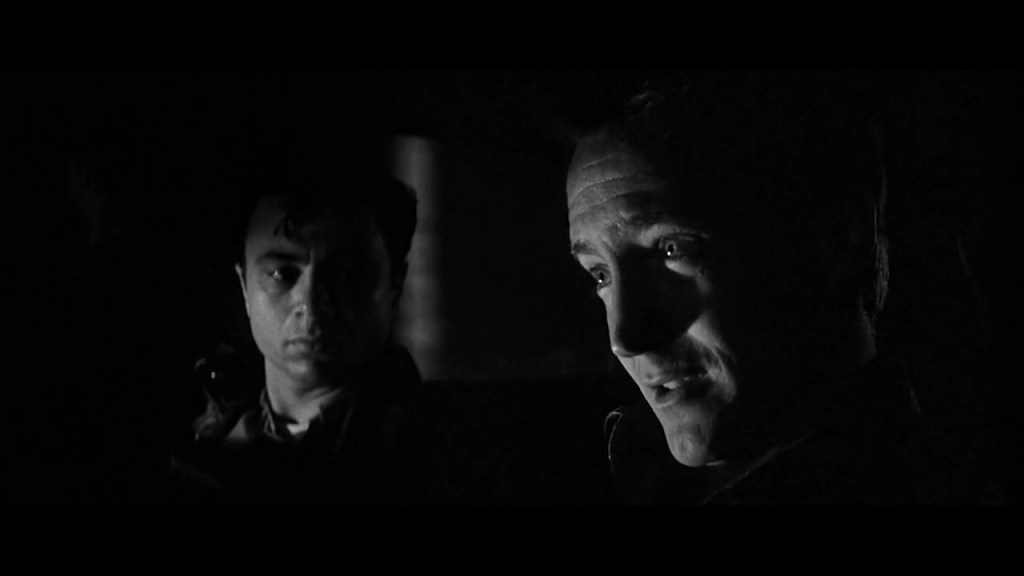
In Cold Blood, based on Truman Capote’s 1964 true crime novel, concerns the real-life tragedy that befell the Clutter family at their Kansas farmhouse in November 1959. Intent on robbery, convicts Perry Smith (Robert Blake), and Dick Hickock (Scott Wilson) broke into the family’s home and shot them all to death.

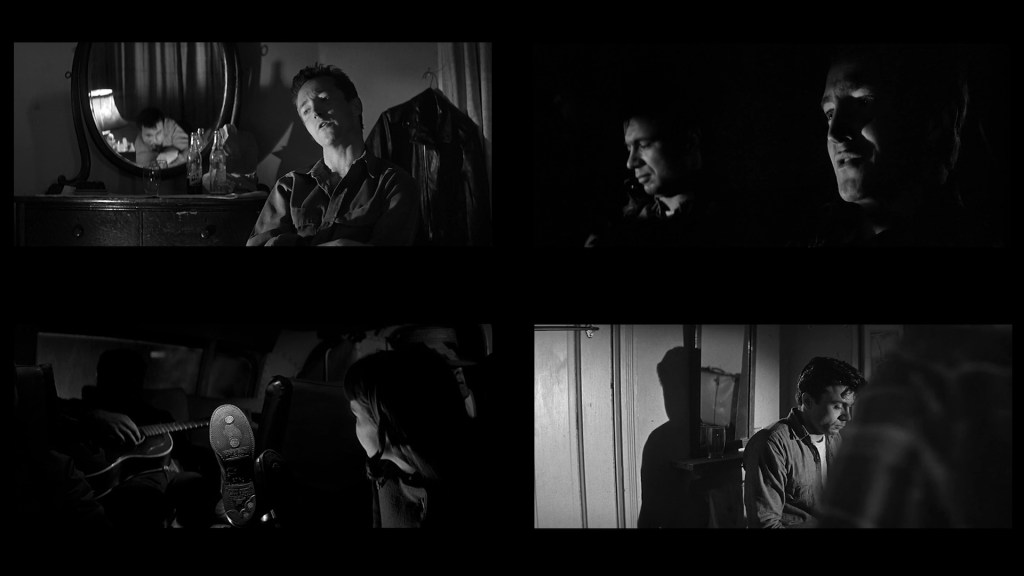
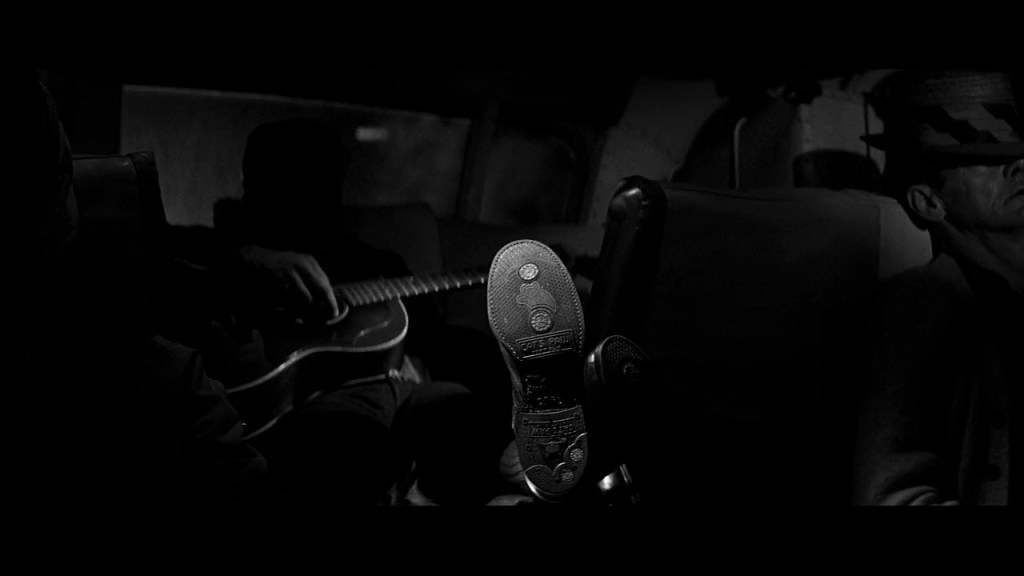
With unspeakable tragedy to mind, the film opens in expressionistic style. Hyper-relational editing links the movements of the Clutters with the movements of the killers – recording a frantic count-down to the inevitable violence. The film loses steam following the murders. The Clutters, and their town of Holcomb, are mostly absent from the rest of the film. We are left with a standard procedural as Alvin Dewey (John Forsyth) investigates the crime, and the killers cross the border to Mexico, before returning to America once again. The third act is very short, skips the judicial process, and ends with Perry and Dick’s executions.

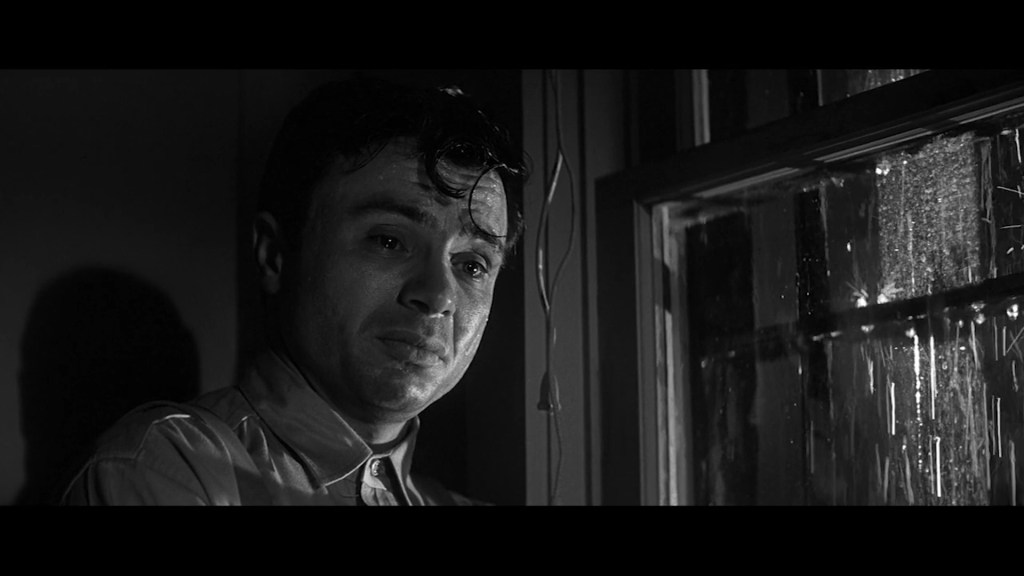
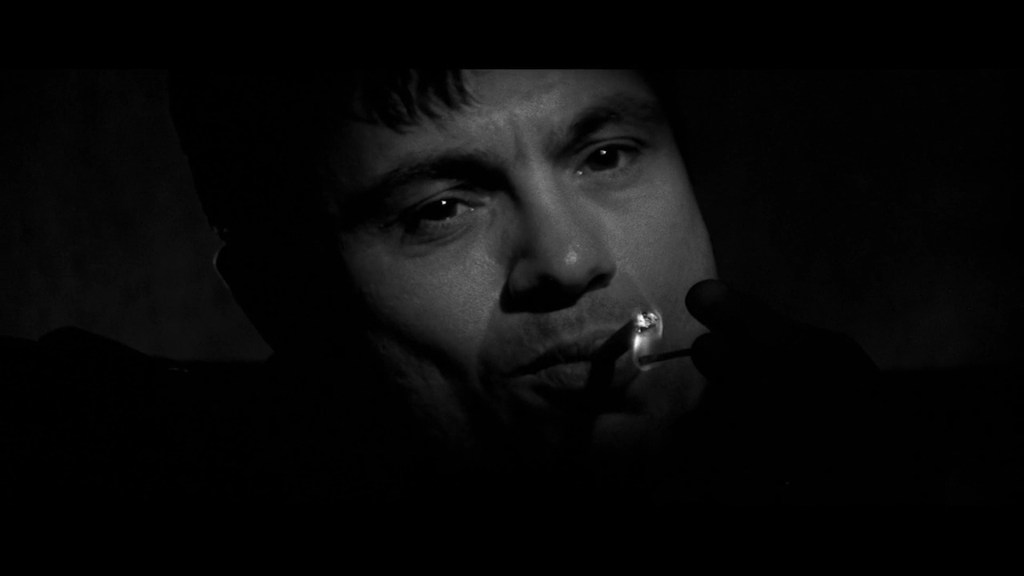
Blake and Wilson give very entertaining performances as Perry and Dick. Wilson channels a raw, disordered energy: one laced with discrete moments of absolute control. He is most effective at the height of a deception. Blake embodies the Perry Truman Capote described – a man poisoned by childhood neglect, deceptively naïve, and dangerously prone to random acts of violence. Yet these two are not enough to sustain the picture at nearly two and a quarter hours.  Director and screenwriter Richard Brooks removed a tremendous amount of material concerning the aftermath of the killings in Holcomb among the Clutter’s friends and neighbours. These are some of the most compelling parts of the story, and constitute its comparative structure – between the safe, law-abiding citizens of Holcomb, and the desperate underbelly of America. Because of the way the story is structured – with all the tension occurring at the beginning of the film, and the identity of the perpetrators known to the audience – the film struggles to maintain tension in the absence of the novel’s commentary on the resultant social tension in Holcomb. Even so, In Cold Blood features a few stunning shots. In his penultimate scene, right before he is to be executed, Perry gives a speech on all the things that lead him to such a meeting with eternity. He is framed in close up, his head next to a window where rain falls heavily outside. The light reflects off the rain drops, bathing the side of his face in phantom tears of light and shadow.  

The trouble with In Cold Blood is that the adaptation doesn’t work very well. It over empathizes with the killers, and leaves Holcomb out for the remainder. It lacks a gravitational understanding of the crime, such as in the opening scene. Images of the Clutters are overlaid with an idyllic instrumental soundtrack, which comes off as tremendously hokey, when it could have been satirical, considering we barely hear about them, or the town again.  Its last-minute speechifying at the gallows over the uselessness of the death penalty feels paltry and way-too-late considering the rest of the screenplay denied itself the opportunity to explore those themes relative to a wider whole. Even so, excellent performances, and some beautiful photography make In Cold Blood worth a watch. 

Review: Men (Garland, 2022)

“Men” is a feast for the eyes, but not for the mind.

It is easy to forgive certain films, especially horror films, that display a certain lack of expertise. That is: well intentioned film that fall a little south of what constitutes a robust story, or cohesive thematics, but makes up for it with some rollicking good horror. Barbarian (dir. Zach Cregger, 2022) immediately comes to mind. Then there are films like MenMen is so stylish, yet so devoid of original thought that one comes away from it wondering how exactly everything went so terribly wrong. 

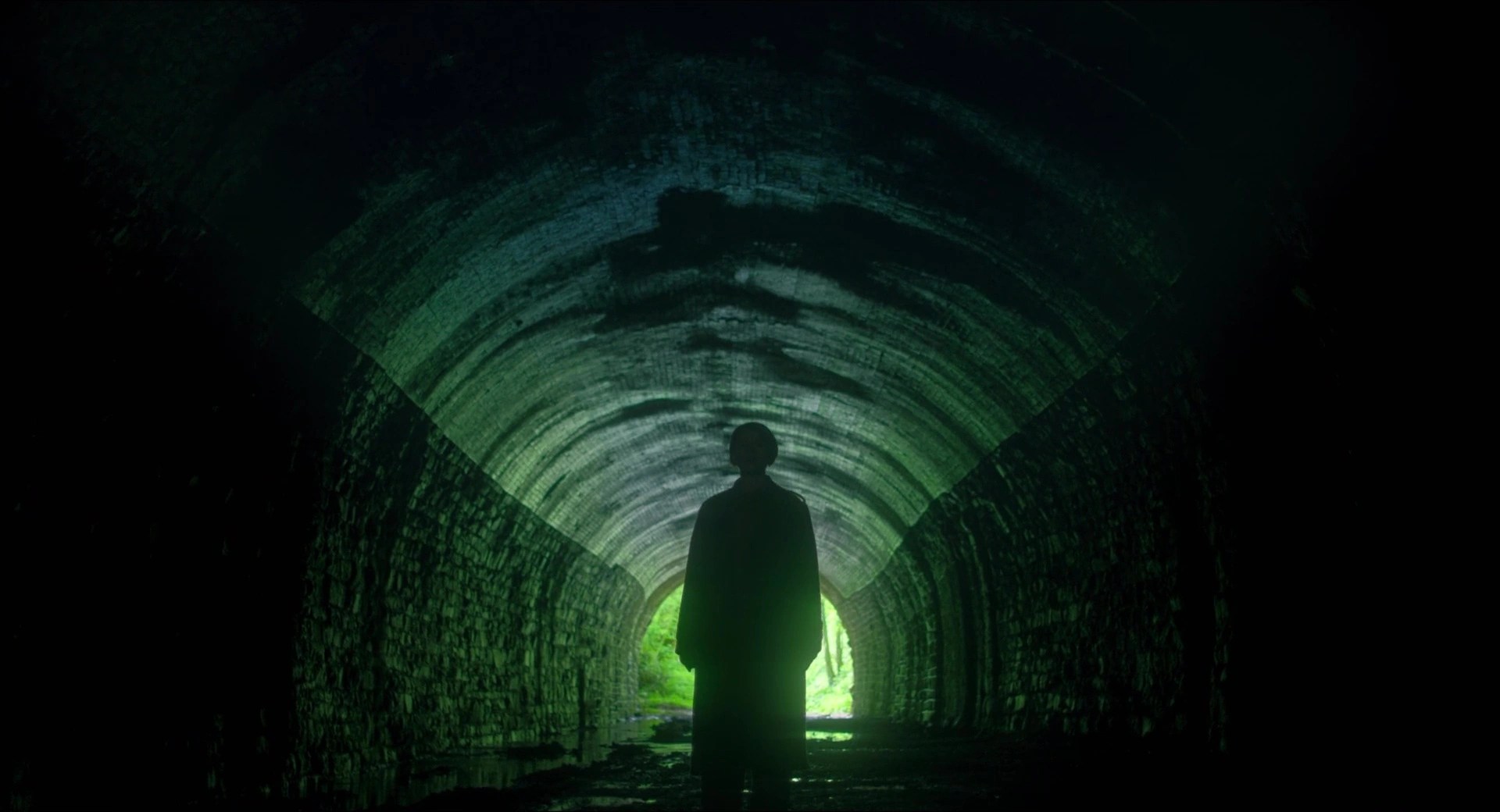
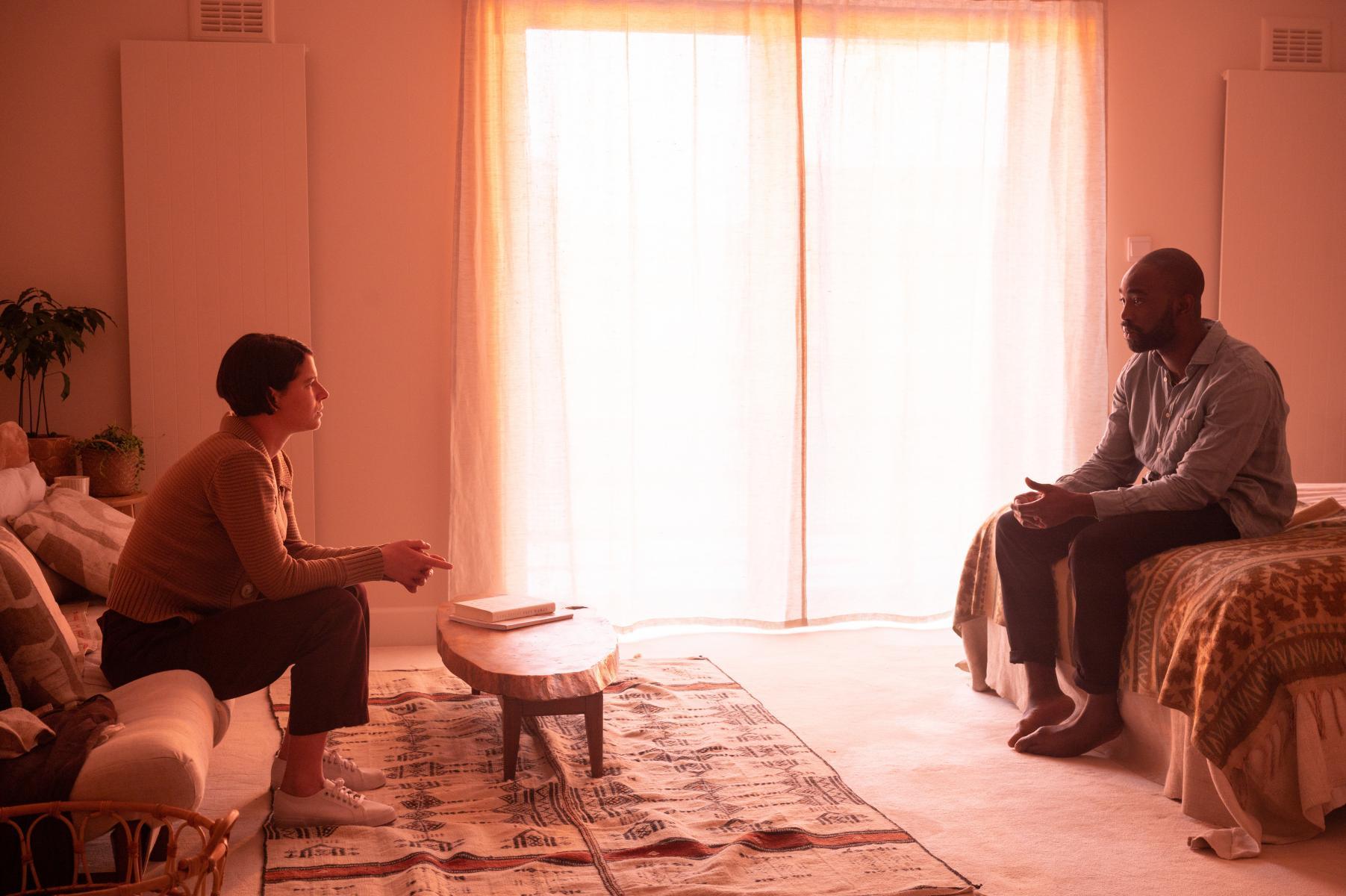
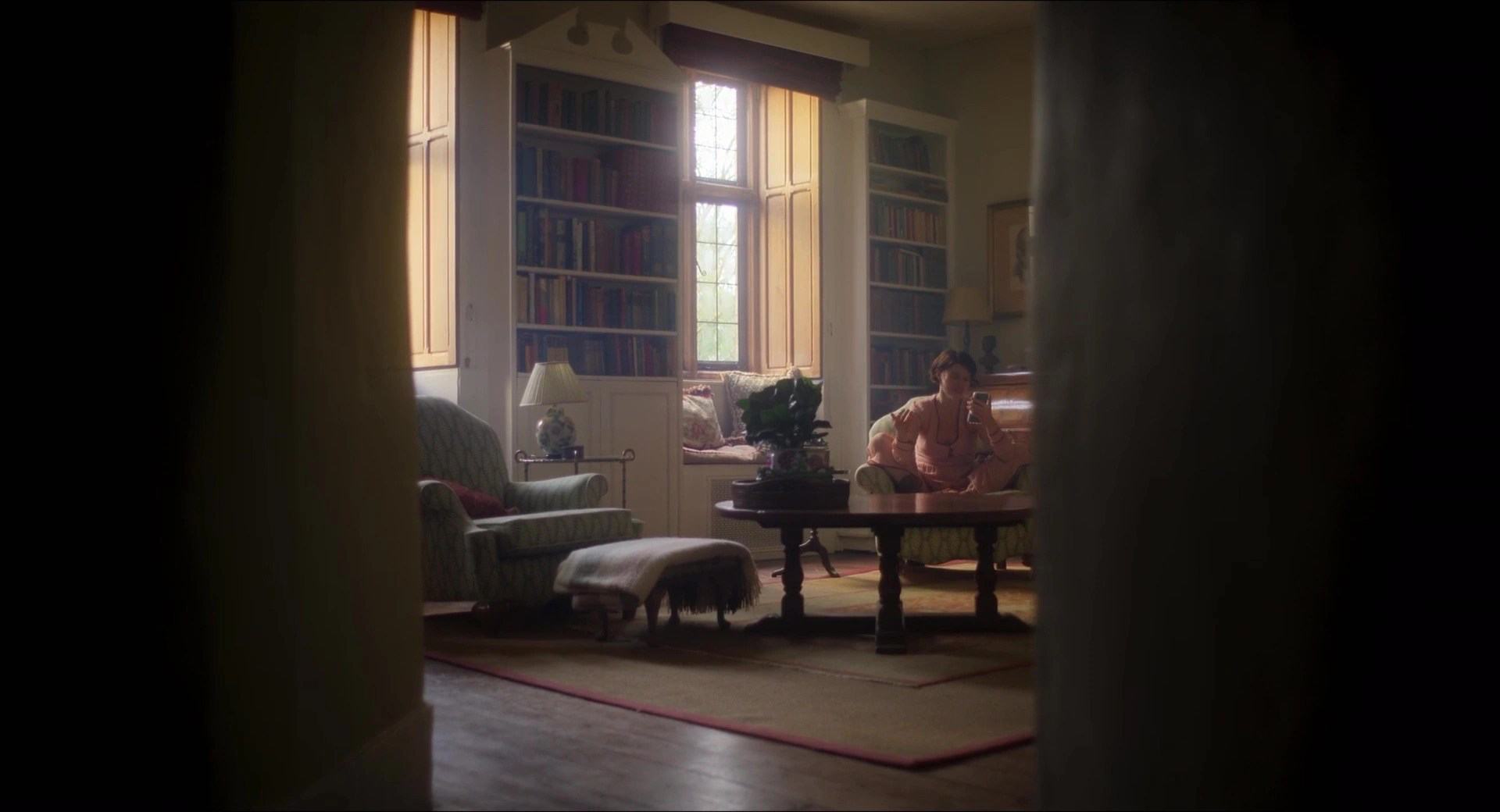
Harper (Jessica Buckley) is haunted by the suicide of her husband James (Paapa Essiedu). Like most haunted people, Harper decides to go heal herself at an isolated manor house in rural England. Surely a reasonable decision. Things start off just fine. The house is cozy, and the landscape is lush and quiet. The owner, Geoffrey (Rory Kinnear), notes the fine pub, just yonder, in the village. Things take a turn when Harper ventures out on a walk. The creep factor is ramped up to eleven during an extended scene where Harper stumbles upon an old tunnel where she happily harmonizes with herself by making echoes. Suddenly, a naked man appears at the other end of the tunnel, screaming and charging towards her. It’s a great scene, but it is rendered totally inert by what follows… which is more of the same.
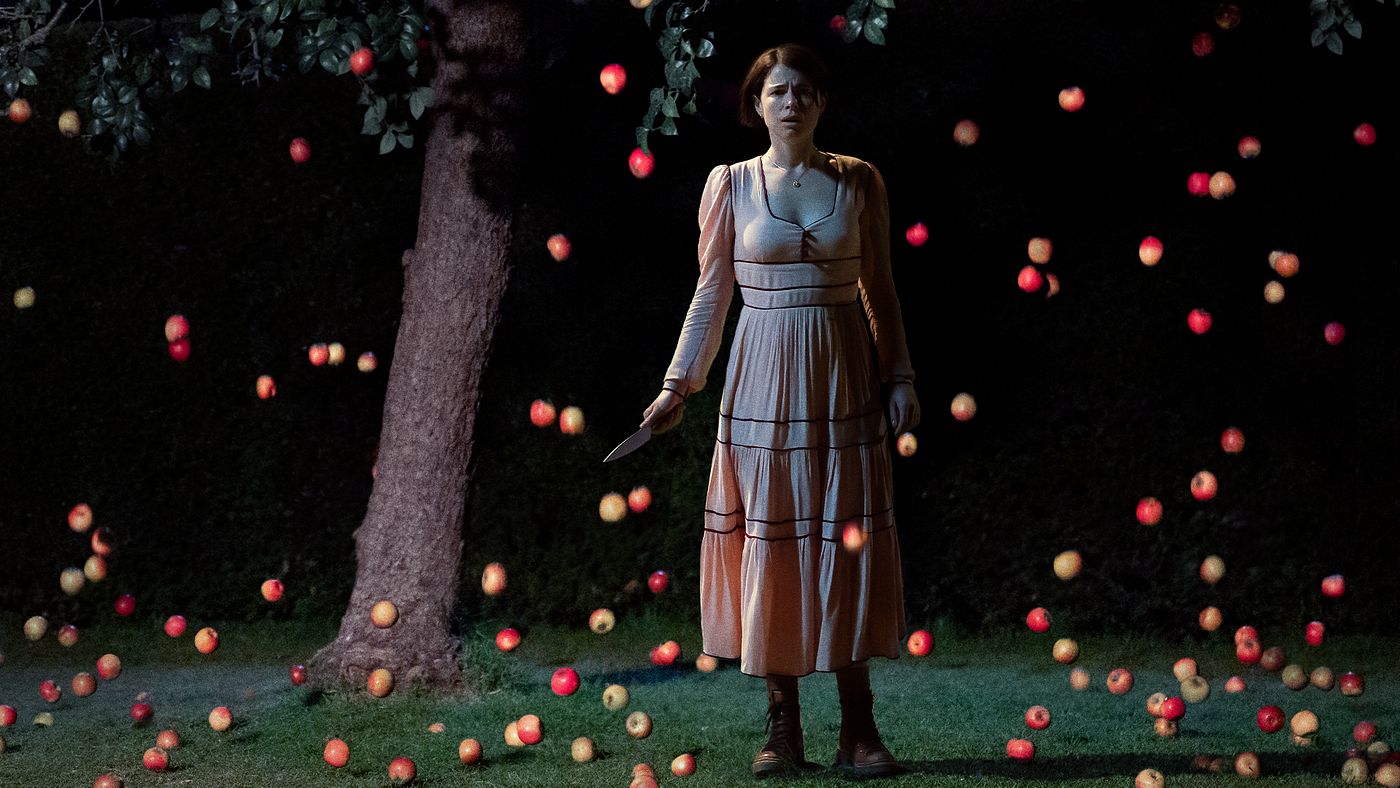
It is difficult to understand what exactly this film is trying to say about trauma, about men, about women, or about anything at all. 

Literally, a parade of naked men who appear and disappear with absurd regularity. The story stops and starts at the tunnel scene. From then on, the film has nothing to say: not about Harper’s inner state, or trauma in general. Harper is just traumatized and guilt-ridden. Nothing else about who she is as a person is evident. Rather, her characterization rotates around the singular event of her husband’s death. Within that framework, it is difficult to understand what exactly this film is trying to say about trauma, about men, about women, or about anything at all. 

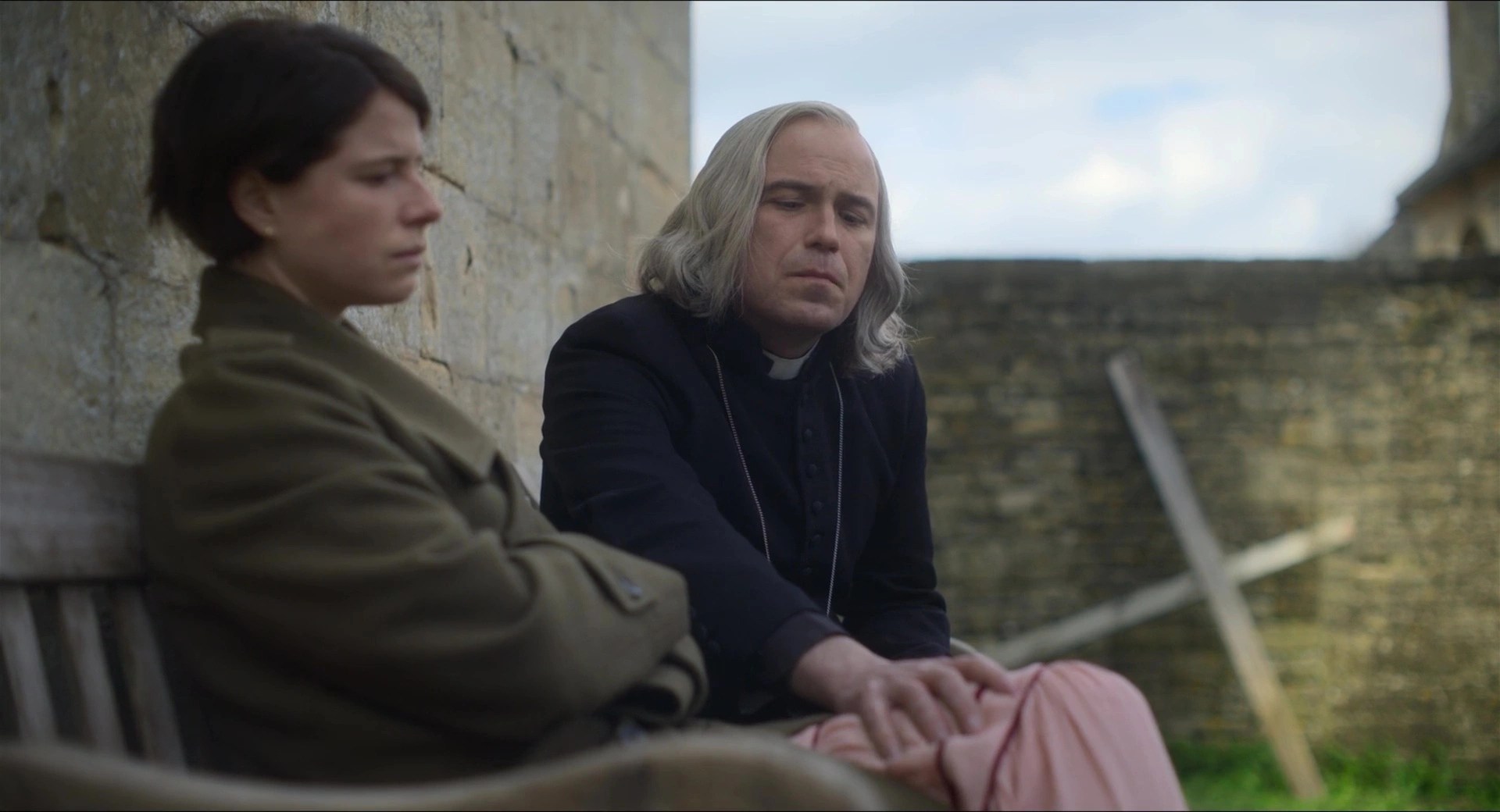
In the village Harper visits a very creepy church where she encounters more crazed men in the form of a teenager who invites her to play hide and seek, and a vicar who lays a hand on her leg and asks her how she feels about causing her husband’s death. For, surely, her refusal to allow her husband to apologize for striking her was the catalyst for his death. Or not.

Men appears to be under the impression that the experience of trauma is highly succinct, without nuance, and thematically soulless.

Maybe we would feel something of what Harper is feeling if the relationship with said husband had any, you know, background information. Instead, it appears that Harper was born on the day of her husband’s death. Born, apparently, into a world populated only by weird, hostile men whose favoured pastime is being naked and staring at her. Men appears to be under the impression that the experience of trauma is highly succinct, without nuance, and thematically soulless. Once you’ve had one encounter with a creepy naked dude, perhaps you’ve had them all.

*SPOILER AHEAD*

The film culminates in a wacky denouement wherein a series of (yes, naked) now pregnant men give birth to a bunch of other naked pregnant men who give birth to her husband. What the fuck.

That is, more or less, the extent of it. Harper feels guilty. Harper is haunted. Period. Surely, it is not that “men” are incapable of creating a nuanced horror film about a traumatized woman. One need only look to Midsommar (dir. Ari Aster, 2019) to see that certain directors don’t think the word “trauma” composes the entirety of the thematic life of a motion picture. Really, that is what makes Men’s failures so egregious. Being that it is ostensibly about feminine interiority yet experiences an alexithymic understanding of what impact such experiences actually have on a person.  

Men appears to be part of a burgeoning sub-genre concerning women whose husbands have committed suicide, and the haunting that follows. The Night House (dir. David Bruckner, 2020) immediately comes to mind as a much more successful foray that maintains the individuality of the main character while also containing striking, and potent thematic visuals on loss and grief. It seems silly to even bother commentating on the visual acumen of Men because the film is so stupid. Truly, there is nothing to see here but a parade of naked dudes. No thanks.