Lexie’s Cine Obscura is also a Youtube Channel!
This essay is the text of a video essay of the same name, which can be viewed here: https://youtu.be/9BXXAaDgvNo?si=krlaeF47l6YmYNr3
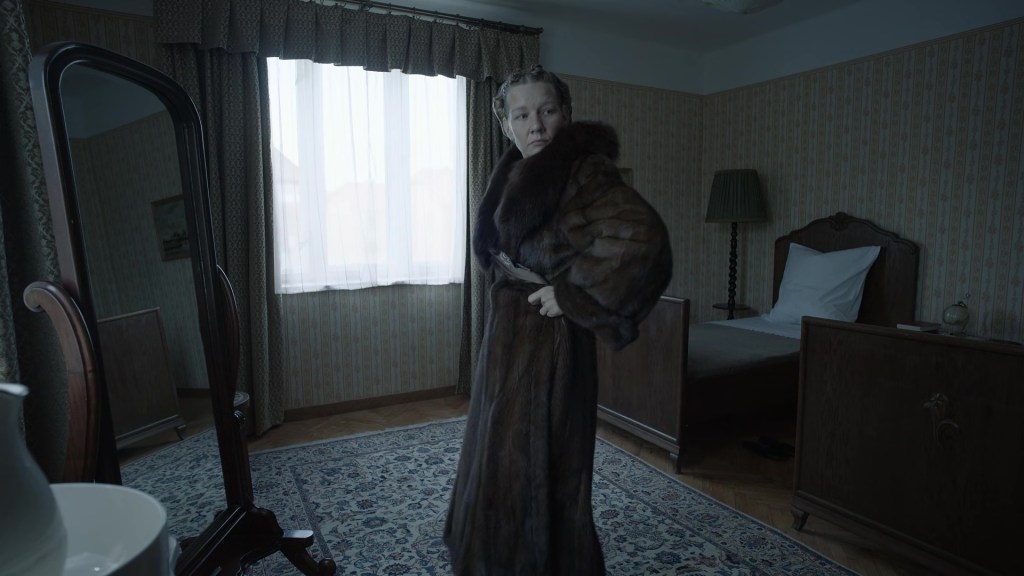
Some films bother me for months. Not because of anything represented or said, but because I feel as if there is some key point about it I have not fully understood. I usually express that as not knowing what a film is “about” – much to the amusement of those around me. I think what I mean is that I’m not sure what mechanism the film in question has provoked ambivalence in me. The Zone of Interest is my latest entry. I walked out of the theatre feeling… unclean. I chalked it up to the way the film conveyed its message by way of flippancy – like Hedwig (Sandra Hüller) putting on lipstick stolen from the incoming prisoners of Auschwitz. The film embodies a refusal to see in every sense. Even the photographs of Hitler do not look out toward the room. A film that formulates itself around the aesthetics of visual silence is a tremendous experiment indeed, and no artist should be faulted if the experiment fails, as I think it does in The Zone of Interest. If the purpose of this film is to convey the aesthetics of evil, bound up by an aesthetics of silence writ in a refusal to see in the cinematic sense, and link that to the psychology of man, the film has failed because it itself refuses to see what makes up men.
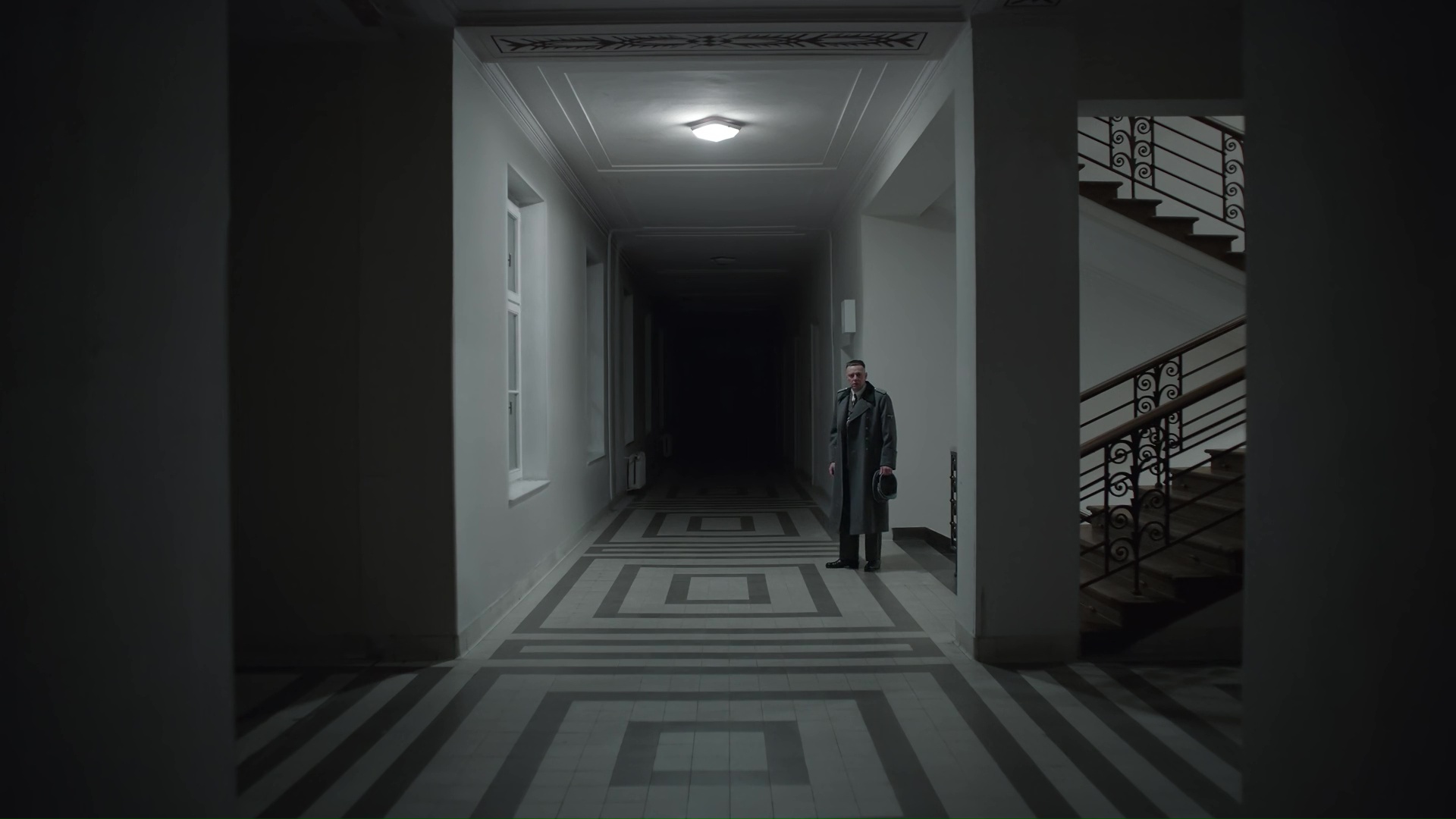
The Zone of Interest cultivates its aura of uneasy disgust by keeping the camera away from the characters. There are very few eyeline matches, or close-ups. Characters sleep in twin beds. The doubling motif is common but somewhat subtle. The static cameras in the house convey little logical space. The camera flips itself during key moments to mirror the scene and reflect the dual action at play. Quiet moments of expression like this dot the film and occur most acutely during a rare tracking shot across the garden with Hedwig and her mother. Characters don’t really see themselves in mirrors – a pointed stylistic turn that keeps them out of the realms of vision.
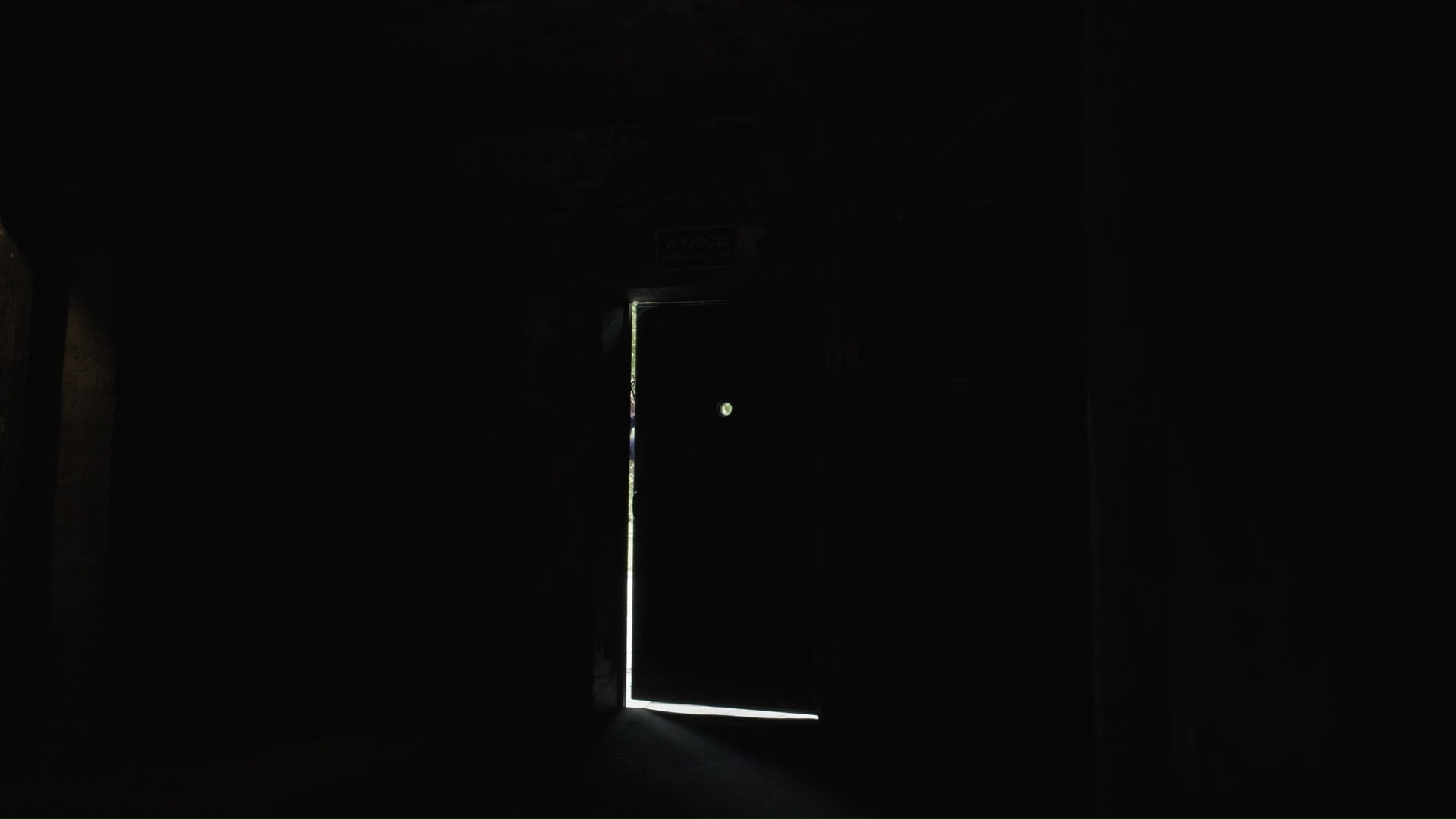
Such is to say: they cannot see beyond themselves to the horrifying events occurring just beyond the garden wall. Only the camera really knows what is happening. Which is sort of the problem. Everything has been outsourced to a camera-eye that assumes a specious gaze as one of history. One of the few eyeline matches occurs at the very end of the film – when Höss is walking down dark staircases during a Nazi gala and dry heaving every few steps. He stops and looks up at the camera – at us – and the scene cuts to a door revealing real footage of staff maintaining the Auschwitz Museum.
Such a historical gaze is assuming that the Höss family had some measure of capability to recognize what was happening and refused to do so. But that assessment totally misunderstands the nature of evil, and what we mean by the “banality of evil”. Because the banality of evil is not a refusal to see, it is a refusal to know there is anything to see because the psyche has been so captured. Evil becomes a way of life, and a reason to live. In 1945, with the allies closing in and defeat assured, the dregs of Nazi high command ordered the German people to fight to the last child – such was their dedication to the horror they wrought upon the world. Evil then becomes a question of the epistemological origin of emotion and action. The Zone of Interest is less concerned with the implications of that reality, and more concerned with a cinematographic exercise that seeks to comprehend evil as something without humanity behind it – turning the camera into an objectif that bears itself up as a documentarian of concept – but such is an unattainable vision – a mismatch between story and form.
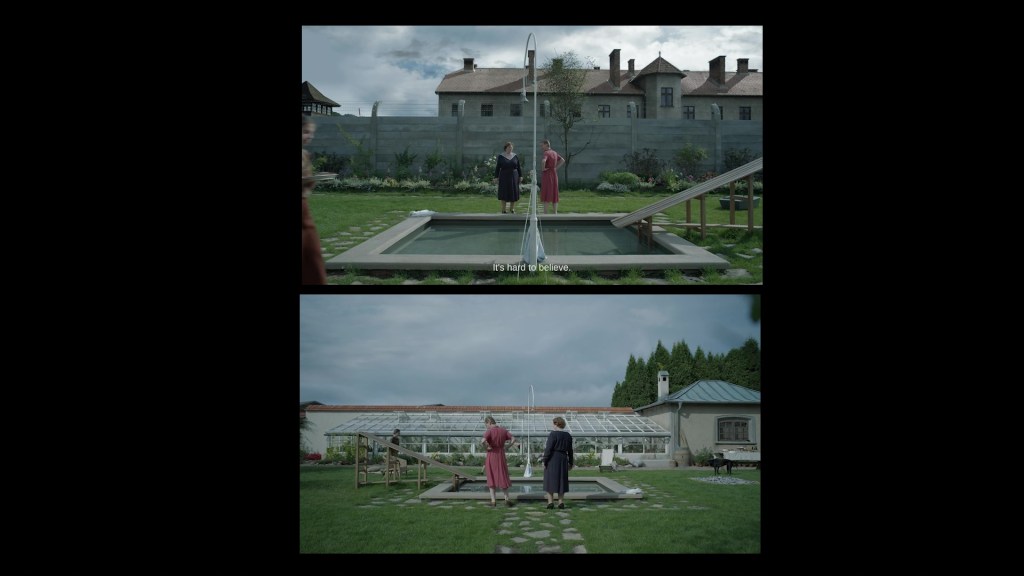
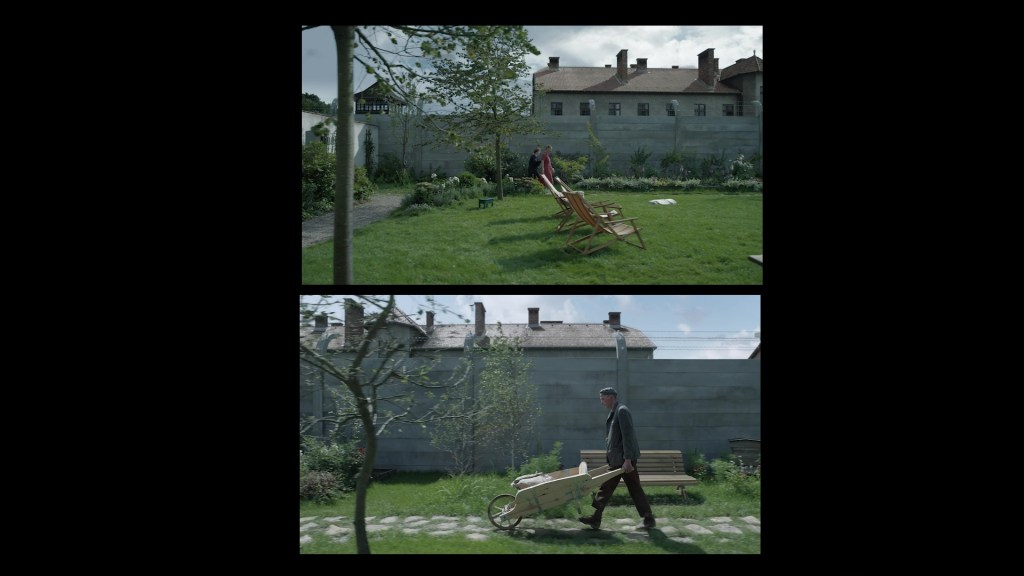
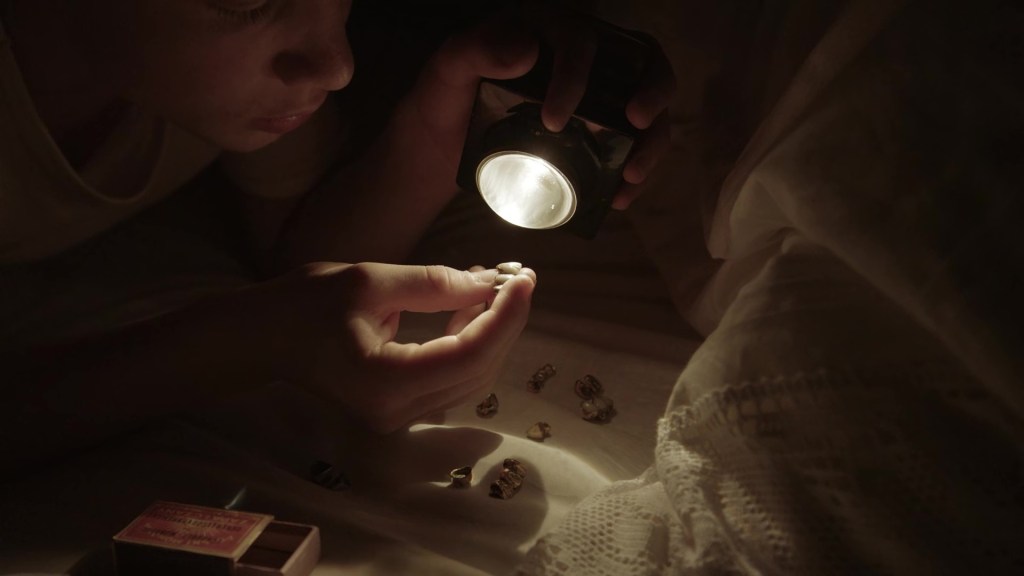
There is a total unreality to this film that is not native to its subject matter. The hyper excited formalism – there to embody the implicit evil of humanity – is much tamer than if the film had complicated our spectatorship by asking us to empathize with them. Some of it feels too much like a joke sometimes – like when one of the Höss sons is playing with human teeth in his room. It’s so winky – as if to say, “yes you are watching a film about the Commandant of Auschwitz”. It relies too much on recognizing the knowledge we have, and referencing things we know occurred, and can contextualize – like the ash from the camp furnaces being used to fertilize the Höss’ garden. The film treats its images as things that can reference a reality beyond themselves. As such they can only be understood on those terms. The image of the ash fertilizer means nothing if the viewer does not know the history behind it. In fact, it’s difficult for me to say how much sense the film would make to a person with no knowledge of WWII or the Holocaust. So, the film itself becomes an obscure object perpetuating the very refusal to see it portrays. It wants to say: “evil people are not ‘somewhere else’, they are right here. They live in houses, and they eat off plates.”
Yet the aesthetic make-up of Zone does not speak to that beyond the superficial.
Zone fails to bear up in respect of its subject matter because it does not comprehend the characters as real people – only avatars of history. In order to understand evil, we must understand people. Downfall, Oliver Hirschbiegel’s German-language Hitler (Bruno Ganz) in the bunker film – was powerful, and controversial, because it treated its subject like a real person. It complicated our spectatorship not by winking, or showing us gratuitous atrocities, but by looking at the nature of human psychology. All men are capable of great evil and that is the thing we need to comprehend, but Zone’s camera pre-emptively negates that possibility. The characters cannot even see each other.
It is notoriously difficult to make a film about the Holocaust. How can cinema possibly comprehend the totality of man’s unstoppable, mechanistic, cruelty to man? I’m not so sure it can. I commend Glazer for trying. The filmmaking in Zone is virtuosic, and it will stand up on that alone. But as an entry into the canon of Holocaust cinema it leaves much to be desired.
 Cine Obscura.