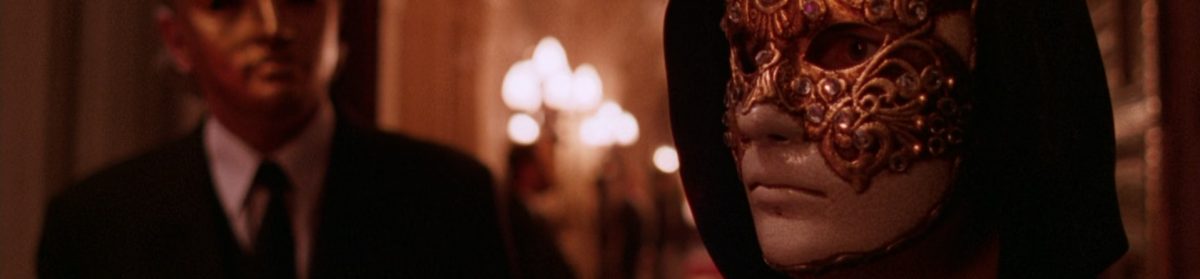
Written and directed by Richard Brooks
Starring Robert Blake & Scott Wilson
1967.
The video version of this review can be found here:
https://www.youtube.com/watch?v=QJKr1K5T3PY
In Cold Blood, based on Truman Capote’s 1964 true crime novel, concerns the real-life tragedy that befell the Clutter family at their Kansas farmhouse in November 1959. Intent on robbery, convicts Perry Smith (Robert Blake), and Dick Hickock (Scott Wilson) broke into the family’s home and shot them all to death.
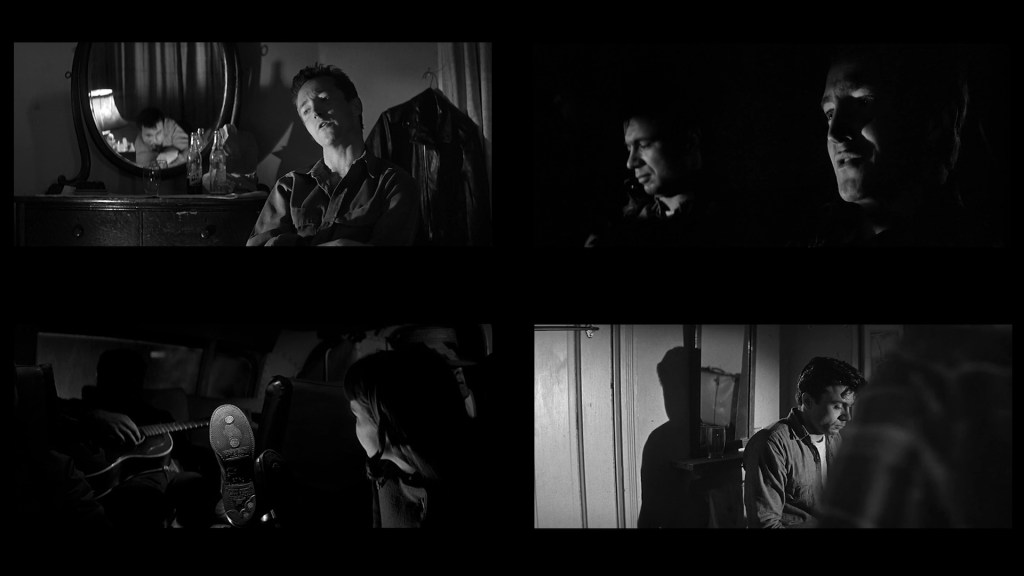
With unspeakable tragedy to mind, the film opens in expressionistic style. Hyper-relational editing links the movements of the Clutters with the movements of the killers – recording a frantic count-down to the inevitable violence. The film loses steam following the murders. The Clutters, and their town of Holcomb, are mostly absent from the rest of the film. We are left with a standard procedural as Alvin Dewey (John Forsyth) investigates the crime, and the killers cross the border to Mexico, before returning to America once again. The third act is very short, skips the judicial process, and ends with Perry and Dick’s executions.
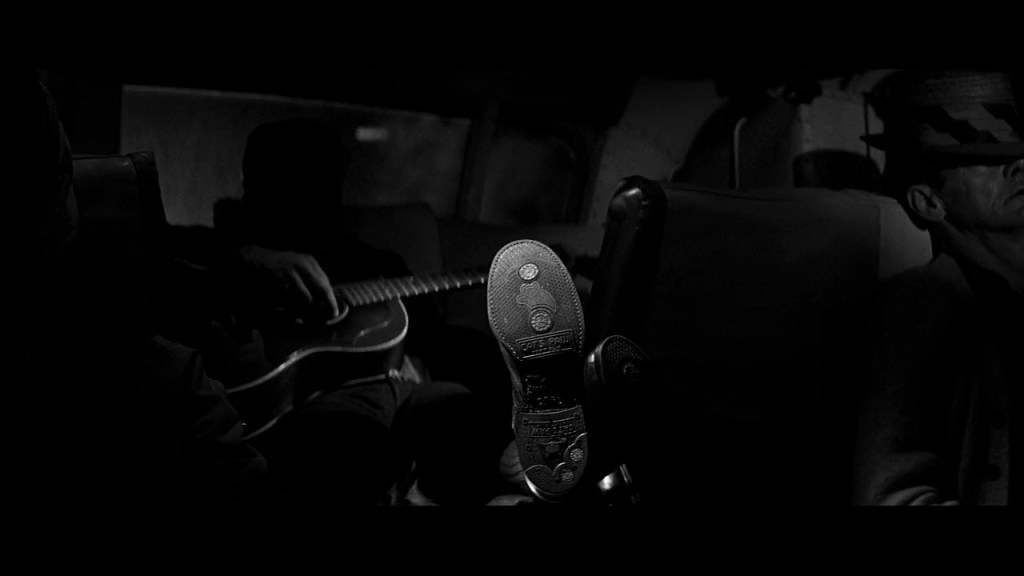
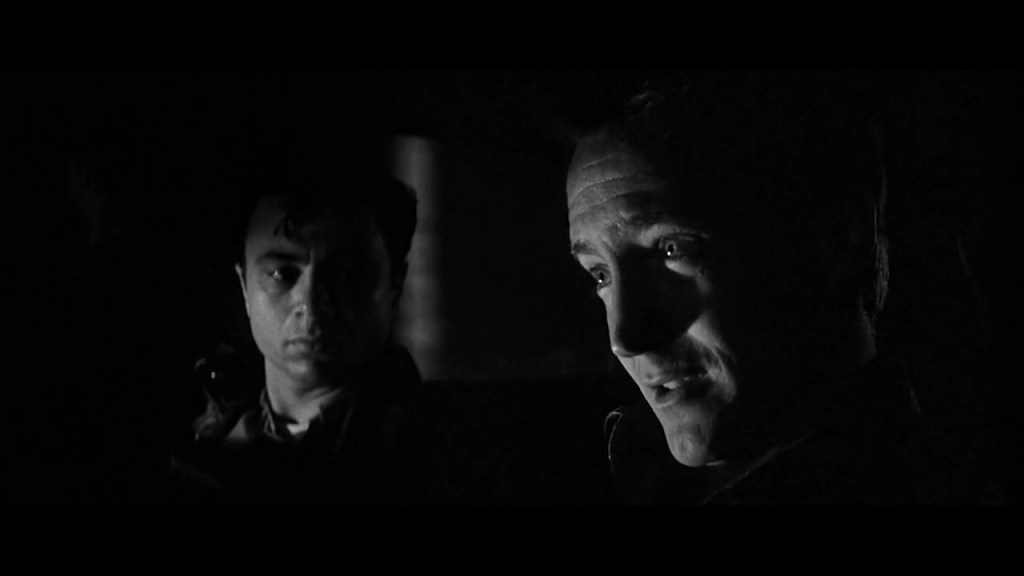
Blake and Wilson give very entertaining performances as Perry and Dick. Wilson channels a raw, disordered energy: one laced with discrete moments of absolute control. He is most effective at the height of a deception. Blake embodies the Perry Truman Capote described – a man poisoned by childhood neglect, deceptively naïve, and dangerously prone to random acts of violence. Yet these two are not enough to sustain the picture at nearly two and a quarter hours. Director and screenwriter Richard Brooks removed a tremendous amount of material concerning the aftermath of the killings in Holcomb among the Clutter’s friends and neighbours. These are some of the most compelling parts of the story, and constitute its comparative structure – between the safe, law-abiding citizens of Holcomb, and the desperate underbelly of America. Because of the way the story is structured – with all the tension occurring at the beginning of the film, and the identity of the perpetrators known to the audience – the film struggles to maintain tension in the absence of the novel’s commentary on the resultant social tension in Holcomb. Even so, In Cold Blood features a few stunning shots. In his penultimate scene, right before he is to be executed, Perry gives a speech on all the things that lead him to such a meeting with eternity. He is framed in close up, his head next to a window where rain falls heavily outside. The light reflects off the rain drops, bathing the side of his face in phantom tears of light and shadow.
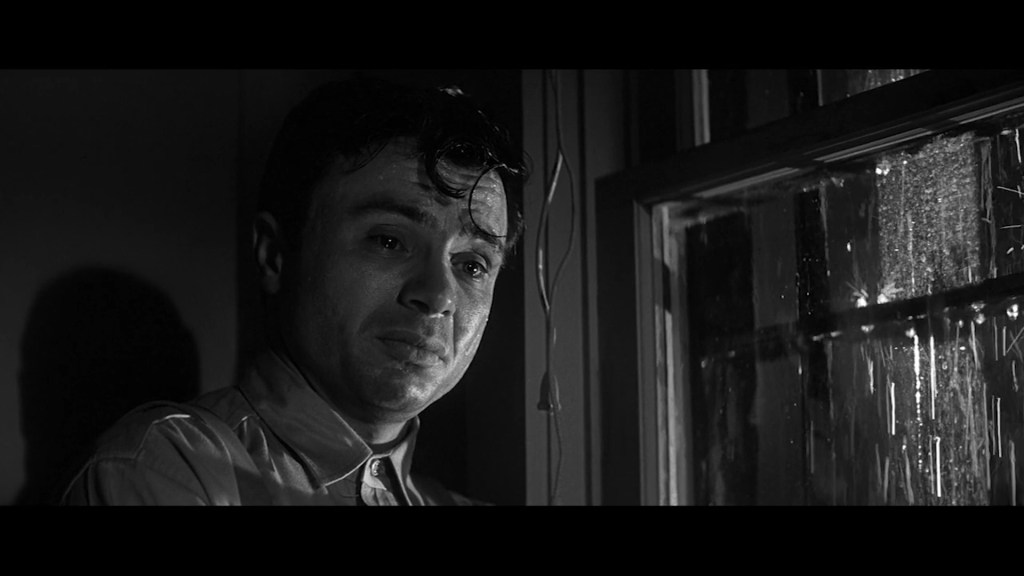
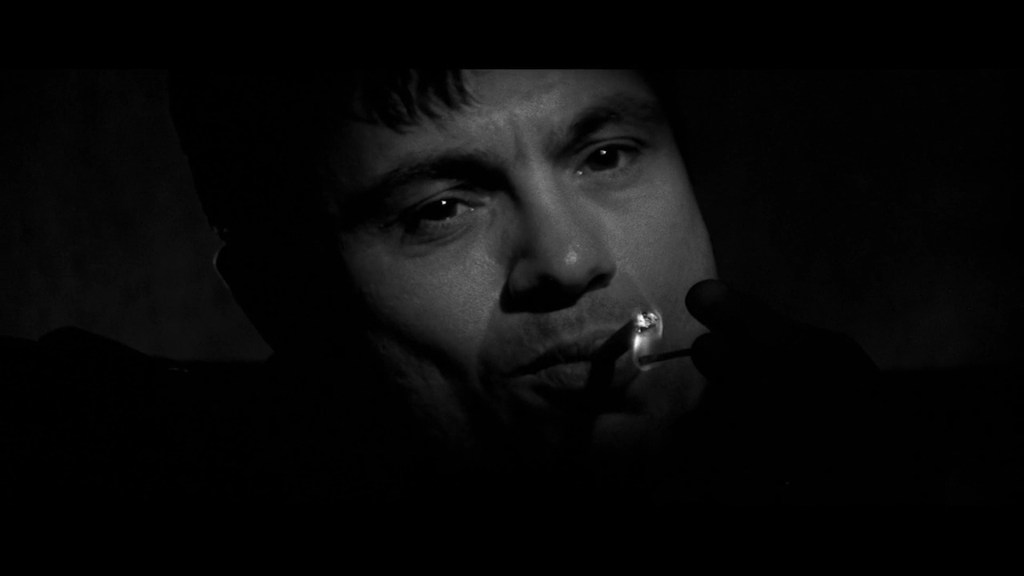
The trouble with In Cold Blood is that the adaptation doesn’t work very well. It over empathizes with the killers, and leaves Holcomb out for the remainder. It lacks a gravitational understanding of the crime, such as in the opening scene. Images of the Clutters are overlaid with an idyllic instrumental soundtrack, which comes off as tremendously hokey, when it could have been satirical, considering we barely hear about them, or the town again. Its last-minute speechifying at the gallows over the uselessness of the death penalty feels paltry and way-too-late considering the rest of the screenplay denied itself the opportunity to explore those themes relative to a wider whole. Even so, excellent performances, and some beautiful photography make In Cold Blood worth a watch.
 Cine Obscura.